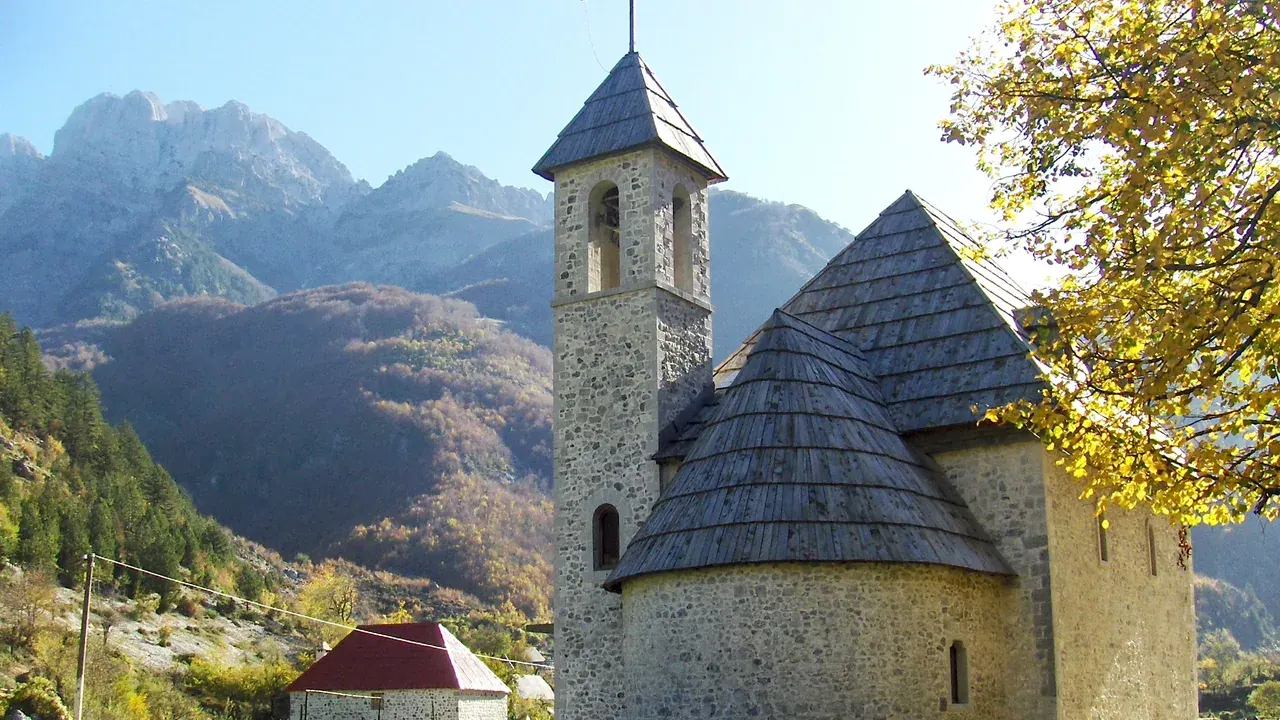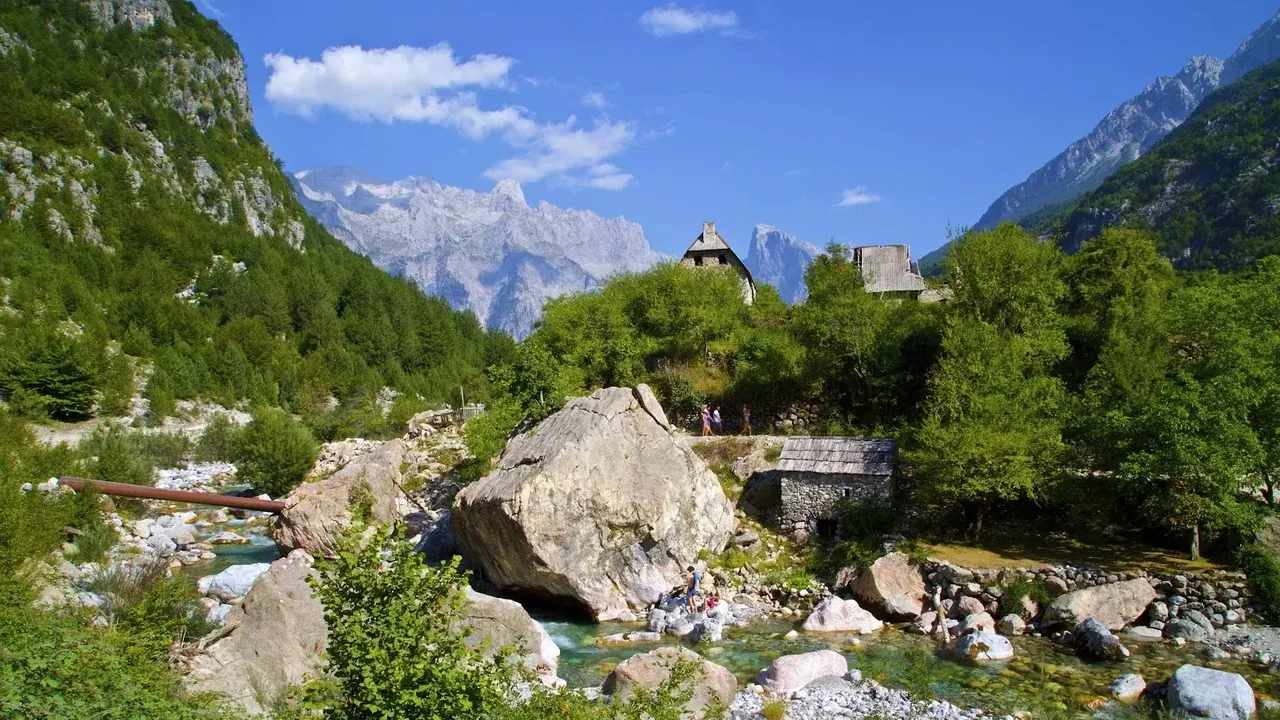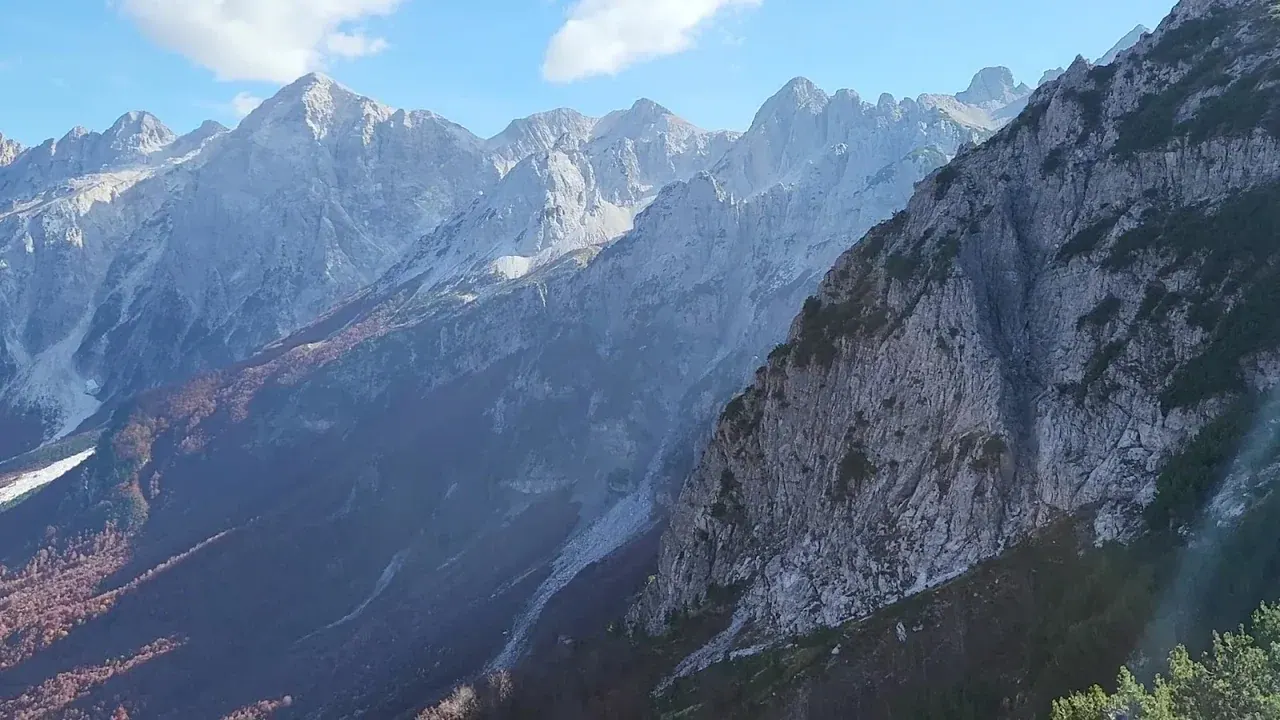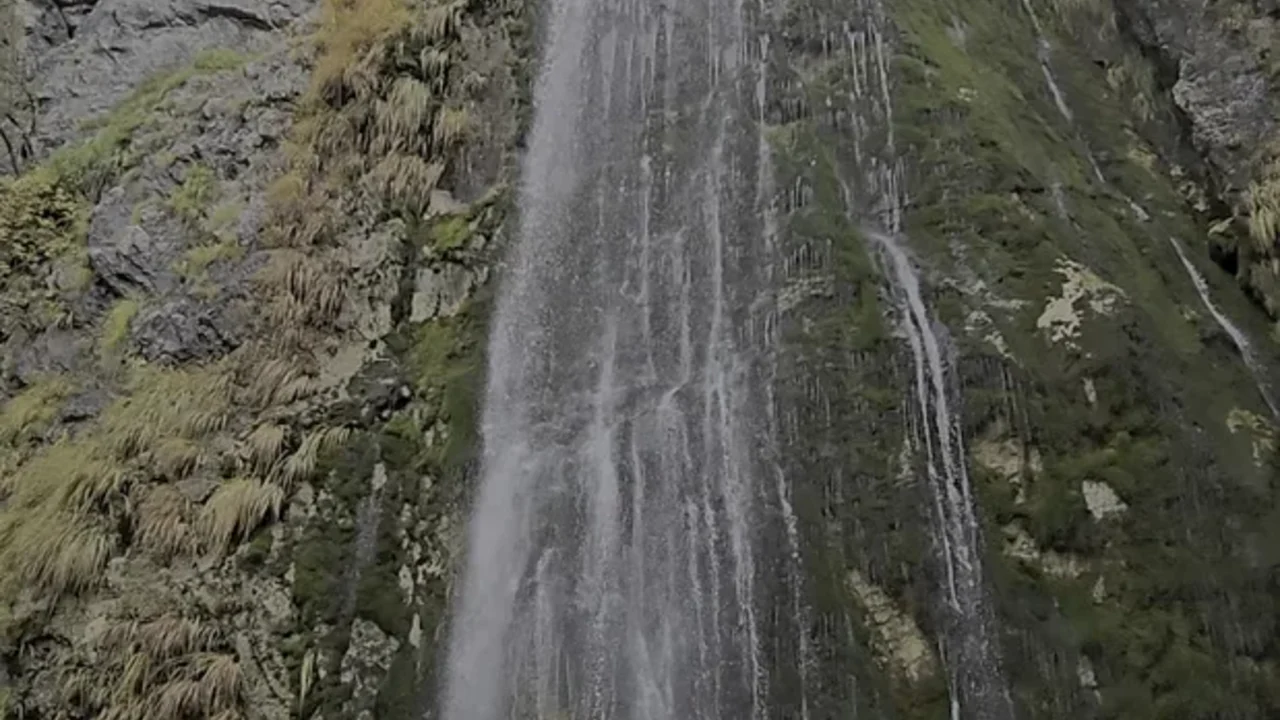
Nderlysa is a tiny hamlet in the lower Theth valley, about 8 km — roughly 1.5 hours on foot — below the village centre, and it is one of the loveliest and least-crowded corners of the area. Here the Shala River has carved the pale "stone groves": smoothed rock pools and a narrow canyon of clear, cold water, watched over by old watermills. Nderlysa is also the gateway to the Blue Eye, a further 40 to 50 minutes' walk up the valley. This guide covers what to see and exactly how to get there.
The Blue Eye itself has its own full write-up — see our Blue Eye of Theth guide — while this piece is about the lower valley you cross to reach it.
Nderlysa at a glance
| Detail | |
|---|---|
| What it is | Small hamlet in the lower Theth valley |
| Distance from centre | ~8 km |
| Walking time | ~1.5 h downhill from Theth village |
| Highlights | Watermills, "stone groves" rock pools, canyon |
| Onward to Blue Eye | ~40–50 min further up the valley |
| River | Shala (the "black river") |
The short version: walk (or take a rough drive) about 8 km down the valley from Theth to reach Nderlysa, cool off in the turquoise rock pools of the stone groves, then decide whether to push on the extra 40 to 50 minutes to the Blue Eye. Carry cash, water and swim shoes — the rocks are slippery and there are no ATMs anywhere in the valley.
The stone groves: rock pools and canyon
The centrepiece of Nderlysa is the run of "stone groves" along the Shala River — sometimes called the black river for its dark, deep flow. Over centuries the water has chiselled the pale limestone into rounded hollows and basins, many of them shaped like natural bathtubs, linked by a narrow canyon and spanned in places by simple wooden bridges. The pools hold water of a startling clear turquoise, and in high summer they are a favourite spot to swim and cool off.
Treat them with respect: the wet rock is slippery, the water is cold and, after rain, the river can rise fast. Wear shoes you can grip and get wet in, watch children closely, and do not swim wearing sunscreen or soaps — the pools are pristine and easily polluted.
The old watermills
Scattered around the hamlet are Nderlysa's traditional watermills — small stone-and-timber structures that once ground the valley's grain using the power of the river. They are part of the working heritage of highland Theth, a reminder that this remote valley fed and sustained itself long before tourism arrived. Several sit picturesquely beside the water and make fine photo subjects on the walk down.
The gateway to the Blue Eye
Nderlysa is the natural staging post for the Blue Eye of Theth. From the hamlet it is a further 40 to 50 minutes' walk up the valley, towards Kaprré, to reach the spring — a deep pool of vivid blue, around 5 m deep and a bracing 5–8 °C all year, fed by water welling up through the karst with a small waterfall above it.
Many visitors combine the two: walk down to Nderlysa, enjoy the stone groves, then continue to the Blue Eye and return the same way, making a full and rewarding day out. Plan it properly with our Blue Eye of Theth guide, and you can read the landmark's own page at /landmarks/blue-eye-theth.
How to get to Nderlysa
There are three ways down from the Theth valley centre:
- On foot: the classic option — around 8 km and 1.5 hours downhill, following the valley and the river. It is scenic and mostly gentle, though you climb back up on the return, so save energy for the way home.
- Rough drive: the track down to Nderlysa is drivable but rough and unpaved in places; a higher-clearance vehicle is safest, and it is far quicker than walking. Some guesthouses will run you down.
- Minibus / 4x4 transfer: in season, guesthouses and local drivers offer shared or private transfers down towards Nderlysa and the Blue Eye trailhead, which saves your legs for the walking that matters. Ask your host, or see our activities page.
However you travel, remember that this is deep in a protected valley: carry out your rubbish, stick to the paths and river banks, and leave the stone groves as clean as you found them.
What to bring
- Cash in lek: there are no ATMs in Theth or Nderlysa — bring enough from Shkodër or Tirana for the whole day, including any transfer.
- Water and food: facilities are minimal; carry your own.
- Swim shoes: the rock pools are slippery and the river bed is stony.
- Layers and sun cover: the valley floor is hot at midday but the water is cold.
- Offline map: signal is patchy, so download the route before you set off.
For the other headline sights of the valley, see our Grunas Waterfall guide and the full landmarks list.
When to go, and how busy it gets
The lower valley is best in the warm months, roughly late spring to early autumn, when the road and trail are clear of snow and the pools are inviting for a swim. High summer, when the sun reaches into the water and the air is hot, is the classic time for the stone groves — but it is also when Nderlysa sees the most visitors, since almost everyone walking to the Blue Eye passes through. If you want the pools closer to yourself, set out early or come in the quieter shoulder weeks either side of peak season, when the light is softer and the crowds thinner.
After heavy rain the Shala River rises quickly and the pools turn cloudy and cold, so the calm, clear turquoise everyone comes for is really a fair-weather sight. In winter the whole valley is largely snowbound and effectively out of reach, and the hamlet's few facilities close — this is a warm-season outing.
Why the lower valley is worth the walk
It would be easy to treat Nderlysa as merely the point you pass on the way to the Blue Eye, but the lower valley deserves attention in its own right. This is the older, working heart of Theth — the watermills, the terraced ground and the river that powered them speak to centuries of self-sufficient highland life, long before the first hikers arrived. The stone groves are a genuine natural spectacle, quieter and more intimate than the busier sights higher up, and on a hot day the pools are the best swimming in the valley. Coming down here also gives you a completely different perspective on Theth: instead of looking up at the peaks from the meadows, you follow the water down through forest and gorge, watching the valley narrow and deepen around you. Give it the time it deserves rather than rushing through.
It pairs naturally with the rest of a Theth stay, too. Where the high passes demand a full, hard day and the village walks fill an easy morning, the lower valley sits comfortably in between — a half- to full-day outing depending on how far you push and how long you linger in the pools. If you are planning your days in the valley, our how many days in Theth guide helps you fit Nderlysa and the Blue Eye around the bigger hikes without trying to do everything at once.
Frequently Asked Questions
How far is Nderlysa from Theth village?
Nderlysa lies about 8 km down the valley from the centre of Theth, roughly a 1.5-hour walk downhill along the Shala River. You can also reach it by a rough, unpaved drive or a seasonal guesthouse transfer, which is much quicker. Remember you climb back up on the return if you walk.
What are the stone groves of Nderlysa?
The stone groves are pale limestone rock pools and a narrow canyon carved by the Shala River near Nderlysa. Centuries of flowing water have smoothed the rock into rounded, bathtub-like basins holding clear turquoise water, linked by wooden bridges. In summer they are a popular, scenic place to swim — but the wet rock is slippery, so tread carefully.
Can you walk from Nderlysa to the Blue Eye?
Yes. From Nderlysa it is a further 40 to 50 minutes on foot up the valley towards Kaprré to reach the Blue Eye — a deep, vivid-blue spring pool that stays around 5–8 °C year-round. Most visitors combine the stone groves and the Blue Eye into one full day, returning the same way.
Do you need cash in Nderlysa?
Yes, and bring it with you. There are no ATMs anywhere in the Theth valley, including Nderlysa, so carry enough cash in lek from Shkodër or Tirana to cover any transfer, food and drink for the whole day. Card payment is essentially unavailable this deep in the mountains.