Valbonë (Valbona) is the other half of the Albanian Alps, the broad, pastoral valley on the far side of the pass from Theth, and the eastern anchor of the great mountain loop. If you have read that this region is "Theth and Valbona" and wondered what the Valbona half actually is, this is it: a wide glacial valley cradled by the peaks of Valbona Valley National Park, quieter and more open than Theth, reached by the country's most scenic ferry ride. Here is how the valley works, getting there, where to sleep, what to do, and when to come.
Valbona at a glance
| Detail | |
|---|---|
| What it is | A glacial valley and national park in the northern Albanian Alps (Prokletije / Accursed Mountains) |
| Main village | Valbonë, with hamlets up-valley toward Rrogam (Rragam) |
| Getting there | Classic route: Shkodër → Koman → Koman Lake ferry → Fierzë → furgon to Valbonë; or overland via Bajram Curri |
| Where to stay | Family-run guesthouses in Valbonë and Rrogam, mostly half-board |
| Rough cost | Guesthouse half-board around 2,500–4,000 lek (~€25–40) per person (hedge; confirm when booking) |
| What to do | Valley walks, the Theth–Valbona hike, river and meadow scenery, springs and viewpoints |
| Best season | Roughly June to September; shoulder weeks either side depending on snow |
| Feel | Broader, greener and more pastoral than Theth; still remote and cash-only |
The short version: most travellers reach Valbonë as one leg of the loop, bus to Koman, ferry through the gorge to Fierzë, then a furgon up the valley, and use it as the start or finish of the famous Theth to Valbona hike. It is a mountain destination with no ATM in the valley, so bring cash in lek.
What and where Valbona is
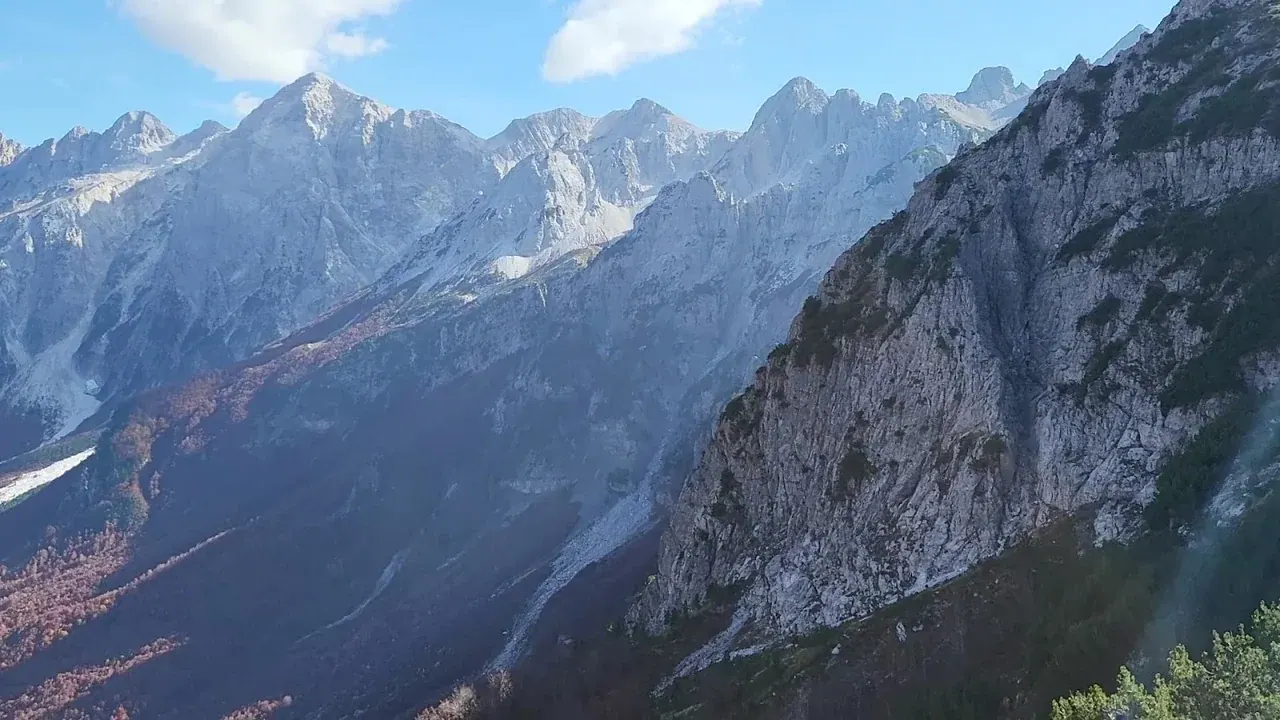
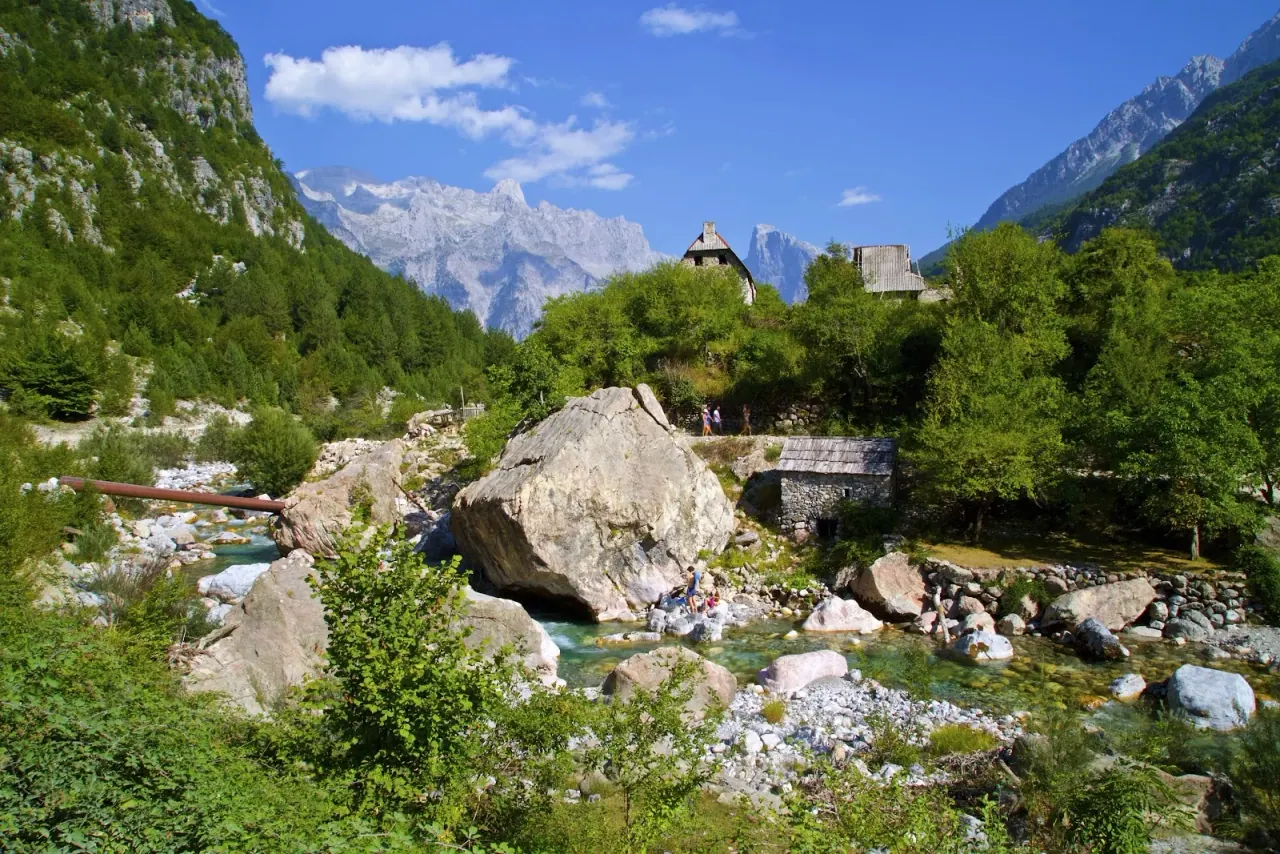
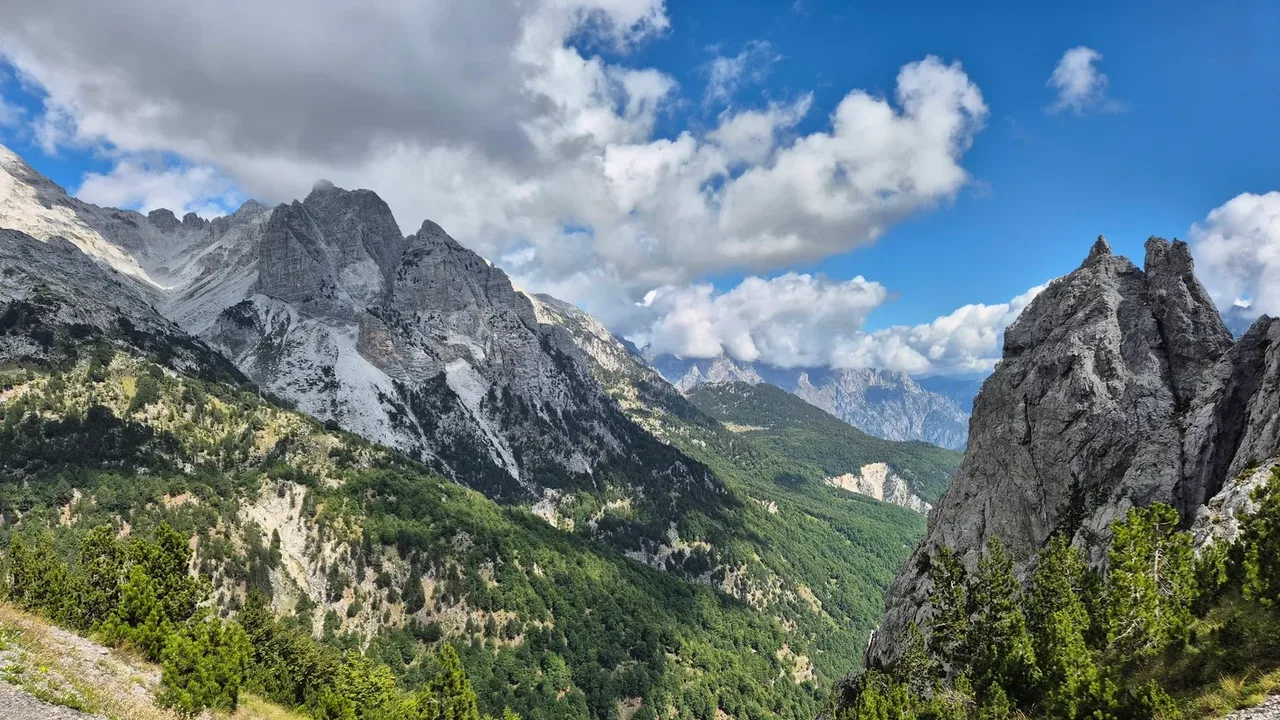
Valbonë is a glacial valley in the far north-east of Albania, running up into the Accursed Mountains (Prokletije) that Albania shares with Montenegro and Kosovo. The valley and its surrounding peaks form Valbona Valley National Park, one of the country's flagship alpine reserves, much as the Theth side is protected as Theth National Park. Where Theth is a tight stone village clustered in a bowl, Valbonë is wider and more spread out: a broad, braided riverbed, hay meadows, and guesthouses scattered along the valley road up toward the hamlet of Rrogam (also spelled Rragam), which sits near the start of the trail over the pass.
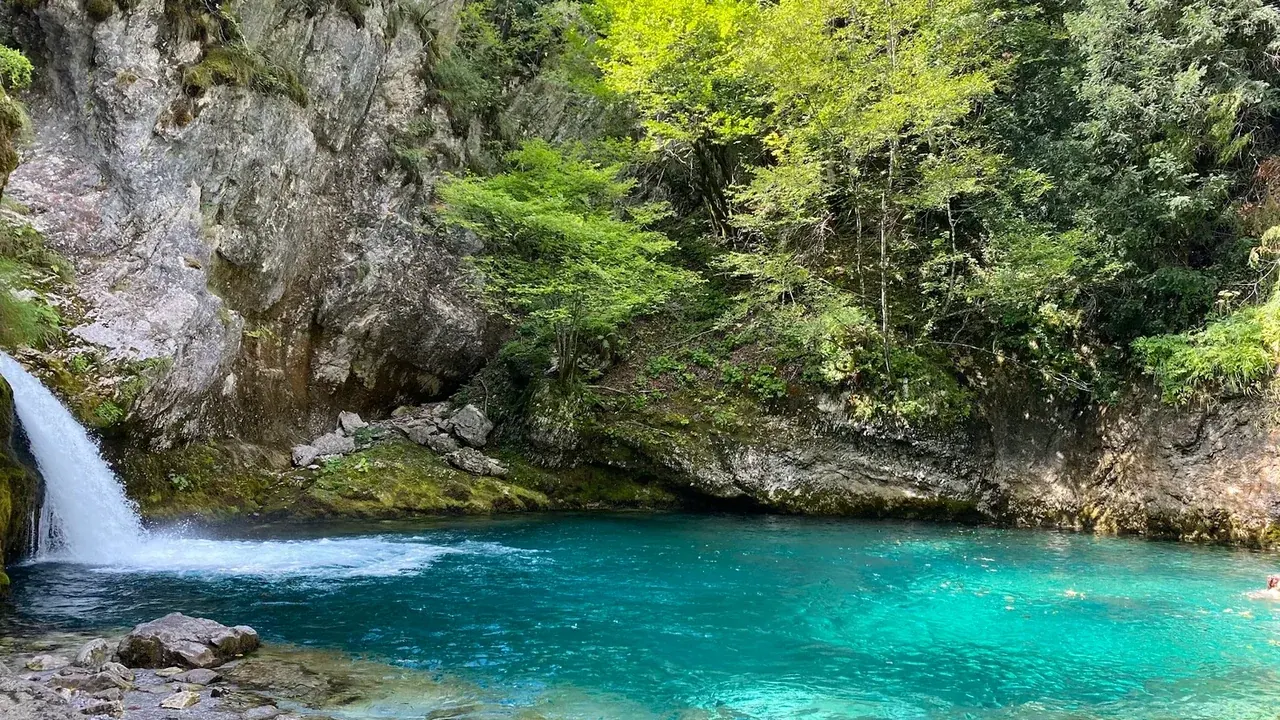
The two valleys are the classic pairing of any Albanian Alps trip, so much so that they are usually named in one breath. If you are weighing which to base yourself in, our Theth vs Valbona comparison lays out the differences; the short answer is that Valbonë tends to feel calmer, greener and more pastoral, while Theth has the denser village atmosphere and the marquee sights like the Blue Eye and Grunas waterfall.
How to get to Valbona
There is no quick way in, Valbonë sits at the end of a remote valley, and reaching it is part of the experience.
The classic route: the Koman Lake ferry
The iconic approach, and the one most travellers use, runs by boat:
- Shkodër → Koman by furgon or transfer (roughly 2–2.5 hours). Morning departures are timed to meet the boat; a combined minibus-and-ferry ticket from Shkodër is commonly sold for around €20–25.
- Koman → Fierzë on the Koman Lake ferry, about 2.5 hours gliding through a flooded gorge that people call Albania's fjord, and the scenic highlight of the whole trip. Foot-passenger fares run roughly 1,000 lek (~€10) upward depending on the operator.
- Fierzë → Valbonë by furgon waiting at the eastern dock, around 45 minutes to an hour, roughly 500–700 lek (~€5–7) per person.
Because there is no road linking the Valbonë and Theth valleys, only the hiking pass, this ferry chain is how the two halves of the Alps connect. Treat every departure time as provisional and confirm the ferry the day before; with essentially one main boat each way per day, a missed connection costs you 24 hours.
Overland via Bajram Curri
You can also reach Valbonë by road via the regional town of Bajram Curri, the gateway settlement for the eastern Alps and the site of the valley's nearest ATM. Furgons and taxis run the final stretch from Bajram Curri up to Valbonë (roughly 30 km). This overland approach skips the ferry, which some travellers do on the return leg or when the boat timing does not suit, but you miss the gorge crossing, which for most people is a reason to visit in the first place. Distances and connections here are slow and thinly served, so build in buffer either way; our how to get to Theth guide covers the wider transport picture across both valleys.
Where to stay in Valbona
Accommodation in Valbonë is almost entirely family-run guesthouses (bujtina), strung along the valley from the village up toward Rrogam. Rooms are simple and the model is usually half-board, a bed plus a home-cooked dinner and breakfast, often built around mountain cheese, fresh bread, garden vegetables and hearty stews. The longest-established of them is Guesthouse Kol Gjoni, a tall stone-and-timber chalet in the centre of Valbonë run by the family that opened the valley's first guesthouse in 1992.
In and around Valbonë village:
- Rilindja (€€), the valley's original travellers' base, a cluster of timber-and-stone chalets at the head of the valley. It has been taking in hikers since long before Valbona was on the map, and its restaurant is the classic gathering point at each end of the crossing.
- Bujtina Albjoni (€€), a white guesthouse with a dark gabled roof and a stone-walled garden, one of the highest-rated family stays in the valley, with wood-lined rooms under the eaves.
- Oda n'Bjeshkë (€€), stone-and-timber rooms with a wide garden and a covered restaurant terrace under the peaks; rough stone accent walls and modern bathrooms sit between bujtina and small hotel.
- Bujtina Arturi (€€), newer timber chalets with balconied wood-and-stone rooms looking over an orchard, a popular overnight on the Peaks of the Balkans circuit.
- Neokulla (€€). A tall stone building in the style of a traditional highland kulla, run as a hotel and restaurant in the centre of the village.
- Breezy Hotel (€€), a modern stone-and-timber hotel around a paved courtyard with an outdoor restaurant; the most conventionally hotel-like stay in Valbonë.
Up-valley and on the trail, convenient if you're walking the pass the next morning:
- Guest House Leka (€). A small bar-restaurant and guesthouse at Rrogam, the last hamlet before the path climbs to the pass, with a timber veranda on the meadow directly at the trailhead.
- Vila Dini (€€), a comfortable riverside lodge at Dragobi, on the valley road, with en-suite rooms and shuttered balconies; quieter and more hotel-like than the village bujtina.
- Guest House Relax (€), a family guesthouse in the remote hamlet of Çerem, north of Valbona on the Peaks of the Balkans route; simple wood-panelled dorms and doubles, and a genuinely off-grid meadow setting.
Some of these offer tent space alongside rooms.
Because Valbonë is where many hikers finish or start the crossing, guesthouses routinely help with the logistics that make the trip work, an early breakfast, a packed trail lunch, luggage transfer to the other valley, or a short jeep ride to the trailhead. Ask about these when you book. In the June–September peak, rooms fill up, so reserve ahead rather than arriving on spec; phone or email booking is the norm for the smaller places.
For eating out rather than half-board, the valley's best-known kitchen is Rilindja (€€), a timber-and-stone dining room with a glassed veranda under the peaks, known for spit-roasted goat and grilled meats. Mulliri i Vjetër i Valbonës (€€) sits beside a centuries-old stone water-mill, reached by a wooden footbridge over the river. Out at Rrogam, where the trail begins to climb to the pass, Simoni Kafe (€) is a hand-built hikers' café of rough timber. The last stop before the crossing, and Bar-Restaurant Emanueli (€) is the other one, a family bar-restaurant and campsite with a covered timber terrace, good for coffee or a plate of grilled meat before or after the pass. Restaurant Tradita (€€) on the valley floor keeps to its name, grilled lamb chops, mixed meats, village cheese and home-baked bread in a wood-beamed hall ringed by the Accursed Mountains. Lower down at Dragobi, near the mouth of the valley, Restaurant Pizzeri Dragobia (€€) is one of the highest-rated stops on the drive up, doing wood-fired pizza alongside grilled meats and river trout.
What to do in Valbona
The valley itself is the main attraction. This is a place to slow down and walk, not tick off a checklist.
- The valley floor and river. Easy strolls along the braided Valbona river, its pale stony bed and meadows framed by the surrounding peaks, are the simplest pleasure here, ideal for a rest day or for travellers who want the alpine scenery without a hard climb.
- Day walks and viewpoints. Marked and informal paths lead up the side valleys and toward springs and pastures; guesthouses can point you to the walk that suits your energy and the day's weather.
- The Theth–Valbona hike. The valley is one end of the region's signature day hike over the Valbona Pass (around 1,800 m), roughly 6–8 hours across the mountains between the two valleys. From the Valbonë side the climb is the gentler of the two directions. See the full Theth to Valbona hike guide for planning, and note that many walkers take a short jeep transfer up to the Rrogam trailhead to skip the valley road-walking.
- Peaks of the Balkans. Valbonë is a staging point on the long-distance Peaks of the Balkans trail that loops through Albania, Montenegro and Kosovo, so it is a natural overnight for multi-day trekkers.
Best time to visit
Valbonë is a warm-season destination. The reliable window is roughly June to September, when the pass is clear of snow, the guesthouses are fully open and the valley is at its greenest. The shoulder weeks either side, late May and into October, can be lovely and quieter, but depend on the year's snow and how many guesthouses are still running, so check ahead. In winter the valley largely shuts down: the high pass to Theth is closed and dangerous, road access can be limited, and most lodgings close. Unless you have specifically arranged off-season transport and a place to stay, plan a summer trip.
Costs and cash
Valbonë is inexpensive by Western European standards but cash-only in practice. There is no ATM in the valley, and cards are not accepted at guesthouses. The nearest reliable ATM is in Bajram Curri, so draw enough lek before you head up. As a rough guide, expect guesthouse half-board around 2,500–4,000 lek (~€25–40) per person per night, with the ferry and furgon connections adding modest sums on top; all of these vary by season, guesthouse and operator, so treat them as ballpark and confirm current rates when you book. Note that Albania is non-EU and non-Schengen, so the euro is not the local currency and EU mobile roaming does not apply. Keep a cash buffer for a region where card facilities are unreliable.
Frequently Asked Questions
How do you get to Valbona valley?
The classic route is Shkodër to Koman by minibus, the Koman Lake ferry through the gorge to Fierzë (about 2.5 hours), then a furgon up to Valbonë (45–60 minutes, roughly 500–700 lek). You can also reach it overland via Bajram Curri, which skips the scenic ferry. There is no road between Valbonë and Theth, only the hiking pass.
Is Valbona better than Theth?
Neither is "better". They pair. Valbonë is broader, greener and more pastoral, with a calmer feel and gentler valley walks, while Theth is a denser stone village with marquee sights like the Blue Eye and Grunas waterfall. Many visitors do both, linked by the day hike over the pass. Our Theth vs Valbona guide compares them in detail.
Where do you stay in Valbona?
In family-run guesthouses along the valley, from Valbonë village up toward the hamlet of Rrogam. Most run on a half-board basis, a bed plus home-cooked dinner and breakfast, roughly 2,500–4,000 lek (~€25–40) per person, though rates vary. Book ahead in the June–September peak, as rooms fill quickly.
What is the best time to visit Valbona?
Roughly June to September, when the pass is snow-free, guesthouses are fully open and the valley is greenest. Late May and October can be quieter but depend on snow and which guesthouses are running. Winter largely shuts the valley down, so plan a summer visit unless you have arranged off-season logistics.
Is there an ATM in Valbona?
No. There is no ATM in the valley and guesthouses are cash-only, so bring enough lek. The nearest reliable ATM is in Bajram Curri, the gateway town on the overland approach. Albania is non-EU, so carry the local currency rather than relying on euros or cards.