Historia
Si lindi
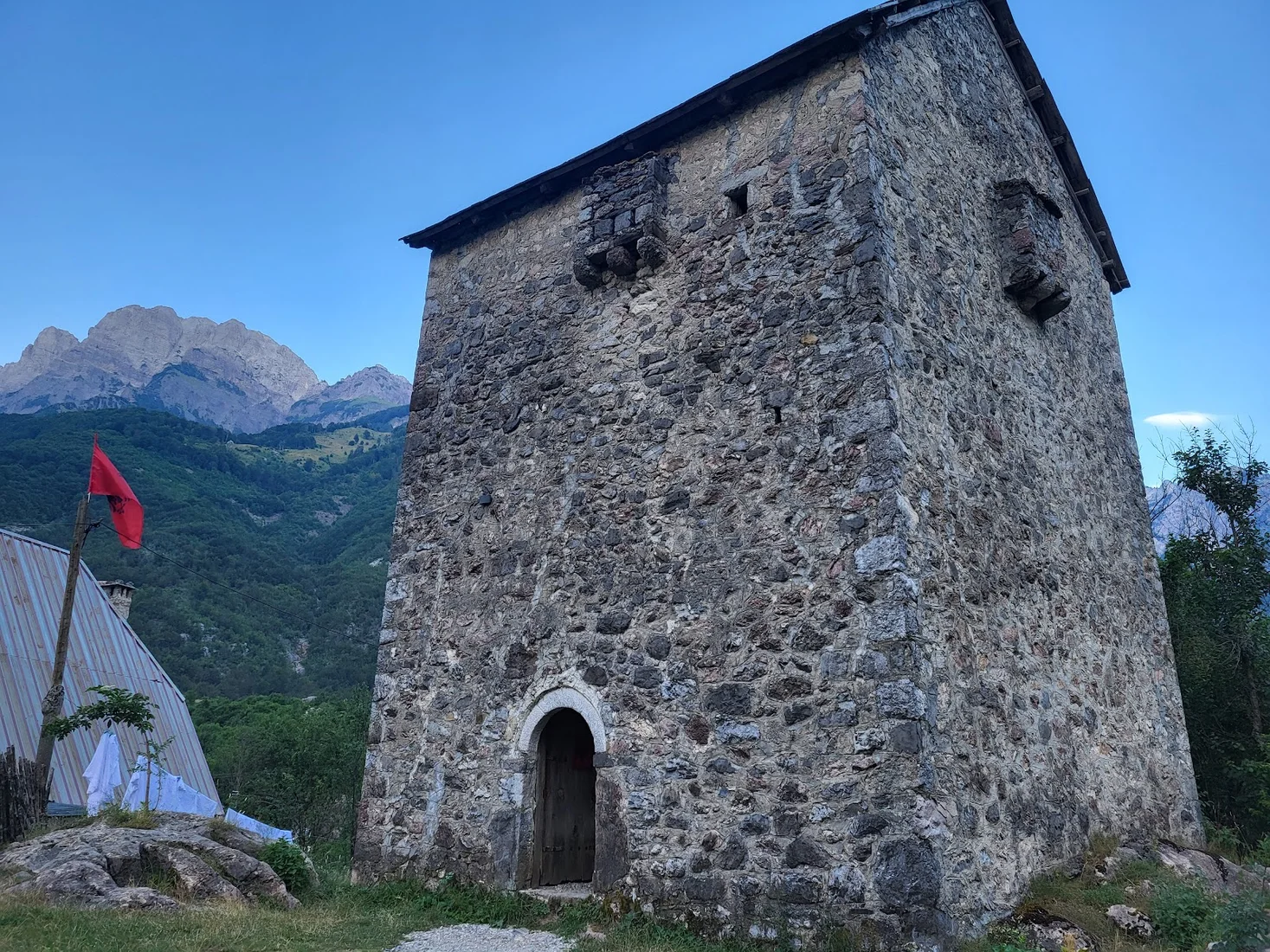
Under the Kanun of Lekë Dukagjini, a man marked by a blood feud could shut himself inside a lock-in tower — the kulla e ngujimit — for protection, sometimes for years. Theth's tower preserves that grim tradition and has been kept and interpreted for visitors as a museum of highland custom and reconciliation. It dates to the 19th century — most accounts place its construction around 1880 — the era of the blood feuds it was built to shelter; the '400-year-old' figure sometimes repeated is a popular exaggeration.
Çfarë do të shihni
Gjatë vizitës
The thick dry-stone walls and narrow window slits built for defence, the cramped interior, and the displays on the Kanun and the blood-feud custom. The tower stands among traditional stone houses near the village centre.
Si ta vizitoni
A short, easy walk from the village centre near the church.
Koha më e mirë
Summer, when the museum is open
Galeria
Mirë të dihet
Under the Kanun, the traditional highland code, a man in a blood feud could lock himself inside the stone tower for protection, sometimes for long periods.
Yes — it is kept as a small museum on the Kanun and the blood-feud tradition, usually open in the summer season for a small fee.
Lexo më shumë