Five days is the sweet spot for the Albanian Alps: enough to base yourself in Theth, warm up on the valley's easier walks, tackle both of the region's great pass hikes, and still leave without feeling rushed. This day-by-day plan uses Theth as your single base. Arrive over the paved SH21 from Shkodër, build from short walks to big passes, and exit the way you came. Everything below assumes a reasonable level of fitness; swap the two hardest days for rest or easy walks if that suits you better.
For how many nights the valley really warrants, see how many days in Theth. For a broader ready-made plan, our itinerary page has more.
The 5-day plan at a glance
| Day | Focus | Route | Hours | Difficulty |
|---|---|---|---|---|
| 1 | Arrive | Shkodër → Theth by furgon; settle in, church, village | 2.5–3.5 h travel | Easy |
| 2 | Warm-up | Grunas Waterfall + Blue Eye of Theth | 5–7 h walking | Easy–moderate |
| 3 | Big pass | Theth → Valbona Pass and back (or one-way to Valbona) | 6–8 h | Strenuous |
| 4 | High route | Peja Pass (Qafa e Pejës) day hike | 6–8 h | Strenuous |
| 5 | Exit | Theth → Shkodër by furgon | 2.5–3.5 h travel | Easy |
The short version: Days 2 to 4 are the heart of the trip, building from easy waterfalls to two demanding passes. Carry all your cash in lek from Shkodër (no ATMs in Theth), pack layers and at least 3 litres of water for the pass days, and confirm your return furgon time with your host the evening before you leave.
Day 1: Arrive via Shkodër
Start in Shkodër, the gateway city, and take the morning furgon up the SH21, around 1,200 lek (~€12) per person, roughly 2.5 to 3.5 hours over the Qafa e Thorës pass (~1,690 m). Aim for the early departure (typically around 07:00) so you reach the valley by mid-morning with the afternoon free. Our Shkodër to Theth guide covers departures, private transfers and driving.
Crucially, draw all your cash in Shkodër first. There are no ATMs in Theth, and guesthouses, the furgon driver and the village restaurants want cash in lek. Budget for four nights of half-board, meals, any guide, and the ride out.
Once you have dropped your bag at your guesthouse, spend the afternoon gently: walk to the Theth church, the stone-and-timber Roman Catholic church built in 1892 that anchors the village, and, if you have energy, the nearby Lock-in Tower, the kulla where feuding men once sheltered under the Kanun. Let your legs recover from the drive; the hard days come next.
Day 2: Grunas Waterfall and the Blue Eye
Ease into the walking with the valley's two best easy-to-moderate targets.
Grunas Waterfall is the closer of the two, a roughly 25 m cascade reached on a well-marked path, an easy couple of hours return from the village. It is the ideal leg-loosener. See our Grunas Waterfall guide for the route.
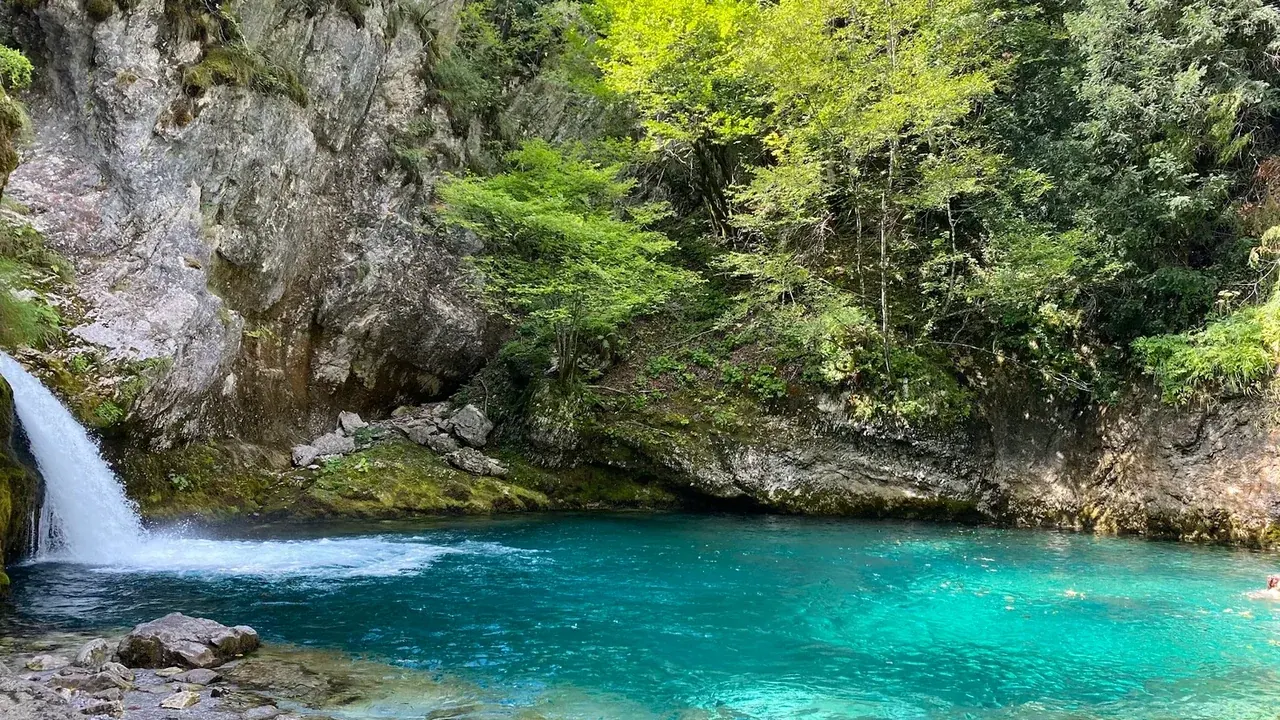
Then head down-valley toward the Blue Eye of Theth, the vivid blue-green spring pool near Kaprré above the hamlet of Nderlysa. It is a longer outing. You walk (or take a rough transfer part-way) down the lower valley past old watermills and canyon pools, then a further 40–50 minutes up to the Blue Eye itself. The pool sits at a bracing 5–8 °C year-round, so a dip is more gasp than swim. Our Blue Eye of Theth guide has the timings and access notes.
Combined, this is a satisfying 5–7 hours on your feet without the sustained climbing of a pass day, perfect preparation for tomorrow.
Day 3: The Theth–Valbona pass
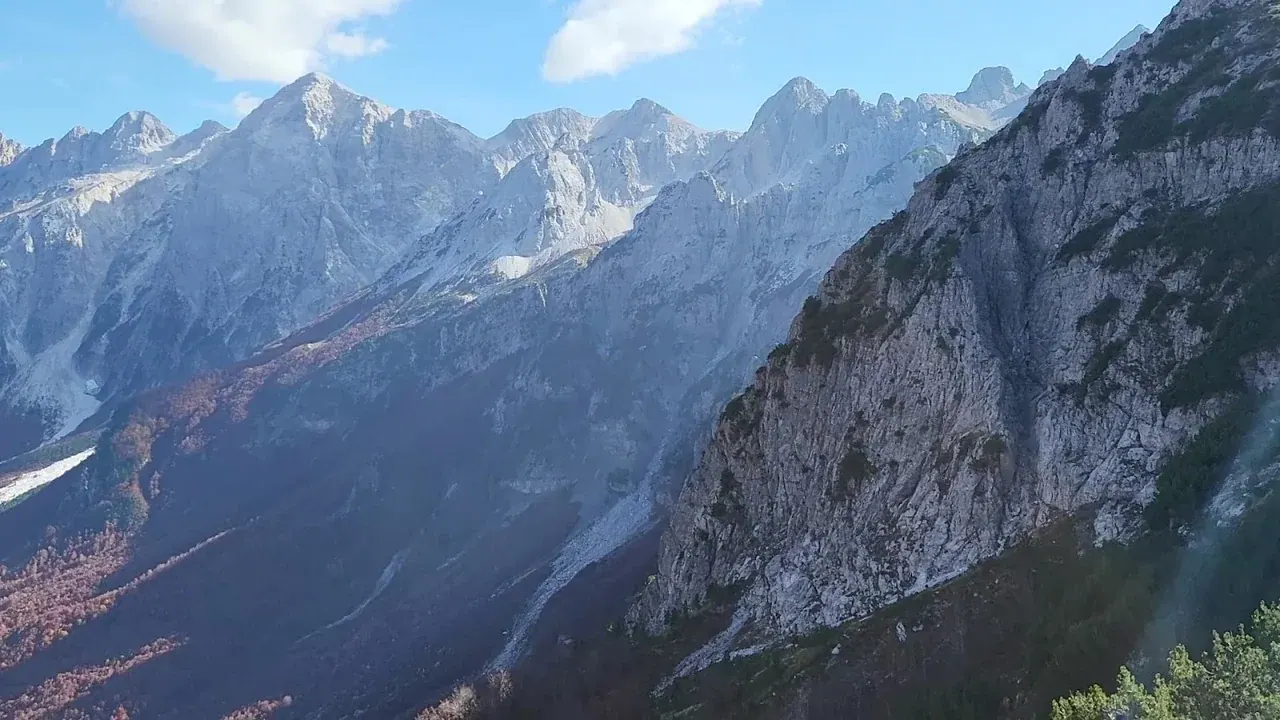
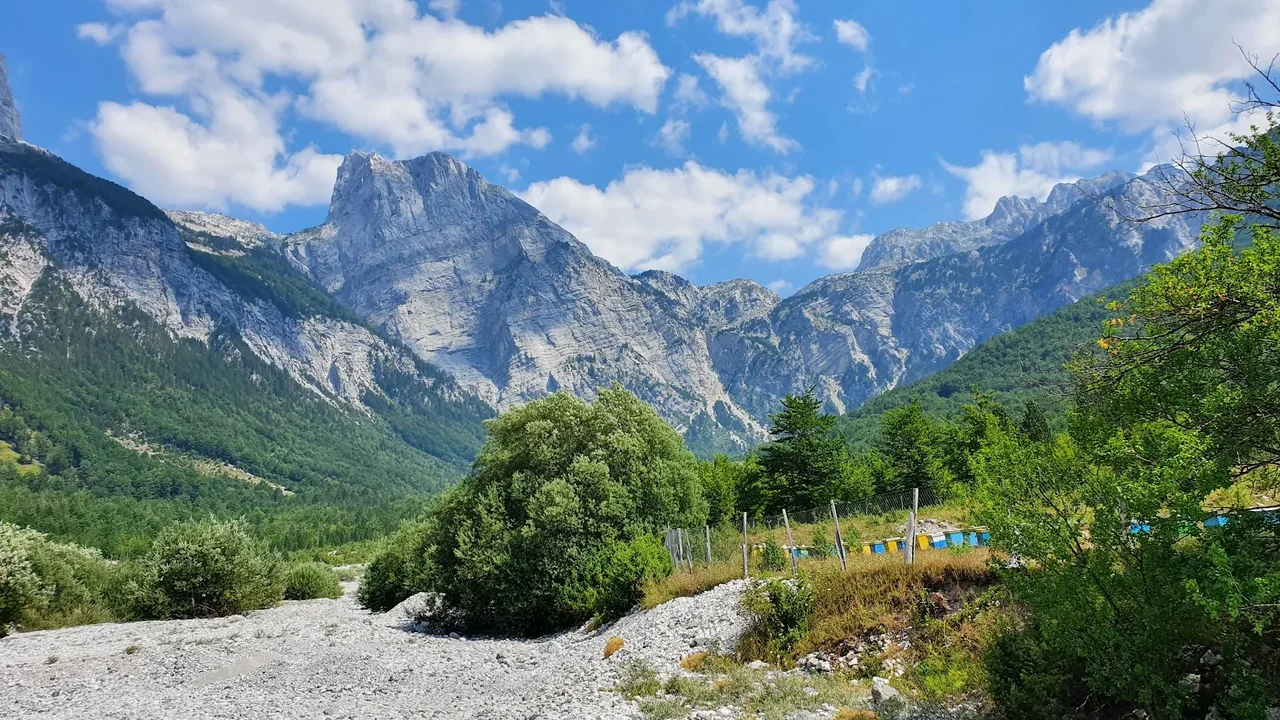
Today is the region's signature hike: over the Valbona Pass (~1,795 m) to the neighbouring valley. The full crossing is about 15 km (14–17 km) and takes 6 to 8 hours, climbing steadily to the pass before a long descent toward Valbona. It is well waymarked and busy in summer, and the views from the top are the ones you came for.
You have two ways to play it:
- Out and back: walk up to the pass (and a little beyond for the views), then return to Theth for the night. This keeps you on your single base and skips the ferry logistics.
- One-way to Valbona: walk the full crossing, stay a night in Valbona, and rejoin this plan, though that turns the trip into a two-base itinerary and changes your exit.
For a Theth-based five days, the out-and-back keeps things simple, but committing to the full one-way crossing is the more memorable option if your onward transport allows. Either way, start early, carry water and layers, and read our Theth to Valbona hike guide first. If early-season snow lingers on the pass, consider a local guide for the top section.
Day 4: The Peja Pass
Your second big day, and a wilder, quieter one than the Valbona crossing. The Peja Pass (Qafa e Pejës, ~1,742 m) is a steep climb of about 1.5 to 2 hours from Theth, around 5 km one way to the pass, up loose scree with exposed sections and little shade. Above looms Maja e Harapit (~2,217 m), the "Matterhorn of Albania". This is the gateway toward Montenegro on the Peaks of the Balkans route, and it feels far more remote than yesterday.
Water is scarce on the ascent, so carry at least 3 litres per person. Sure footing matters on the scree, and the exposure rewards care. Strong walkers push on beyond the pass toward Lake Peja or the flanks of Maja e Harapit for a full 6–8 hour day; others turn around at the pass itself, satisfied with the views back over the valley. Our Peja Pass hike from Theth guide details the route and turnaround points.
If two hard pass days back to back is too much, swap this for a rest day in the village or an easy stroll to Nderlysa's stone groves and river pools.
Day 5: Exit to Shkodër
The return furgon usually leaves Theth in the morning, often around 10:00 from the valley centre, sometimes with a second peak-season run. There is no printed timetable, so confirm the time and pick-up point with your host the evening before. The drive back down the SH21 to Shkodër takes the same 2.5–3.5 hours.
From Shkodër you can connect onward to Tirana, the coast, or Montenegro. If you have any lek left over, spend it before you leave the mountains, and reflect that five days barely scratches a range that could hold you for weeks.
Tips for this itinerary
- Cash is king. No ATMs in Theth. Carry enough lek from Shkodër for the whole stay.
- Layers and water. It is markedly cooler at altitude; carry 3 litres for pass days and warm layers even in July.
- Offline maps. Mobile signal is patchy in the valley. Download Organic Maps or maps.me before you arrive, and consider an eSIM such as Saily for data on the Albanian side, since Albania is outside the EU roaming zone.
- Flex the hard days. Days 3 and 4 are both strenuous. If your fitness or the weather says otherwise, swap one for an easy walk, the plan bends easily around a single base.
Frequently Asked Questions
Is 5 days enough for the Albanian Alps?
Yes, five days based in Theth lets you settle in, walk the easy Grunas and Blue Eye routes, tackle both the Theth–Valbona and Peja passes, and travel in and out without rushing. It is arguably the ideal length for a first visit: long enough for the highlights, short enough to plan simply.
Can I do this itinerary without a guide?
Mostly, yes. The Grunas, Blue Eye and Theth–Valbona routes are well waymarked and self-guidable in summer with an offline map. The Peja Pass is rougher and more exposed, so less-experienced walkers may want a guide there, and a guide is wise for the Valbona Pass if early-season snow lingers.
How much cash should I bring for 5 days in Theth?
Enough for four nights of half-board (2,000–3,500 lek/€20–35 per person per night), meals, any guide, and your furgon fares. All in lek, drawn in Shkodër. There are no ATMs in Theth, so budget generously and carry a buffer, since card payment is barely accepted in the valley.
Do I need to stay overnight in Valbona?
Not for this plan. Basing solely in Theth, you can walk the Theth–Valbona pass as an out-and-back and sleep in Theth every night. If you'd rather do the full one-way crossing and overnight in Valbona, you can, but that turns it into a two-base trip and changes your exit route.
What is the hardest day of this itinerary?
Days 3 and 4, the Theth–Valbona and Peja passes, are the most demanding, each 6–8 hours with sustained climbing to around 1,795 m and 1,742 m respectively. The Peja Pass feels wilder, with scree and scarce water. Both reward good fitness; swap one for a rest day if needed.