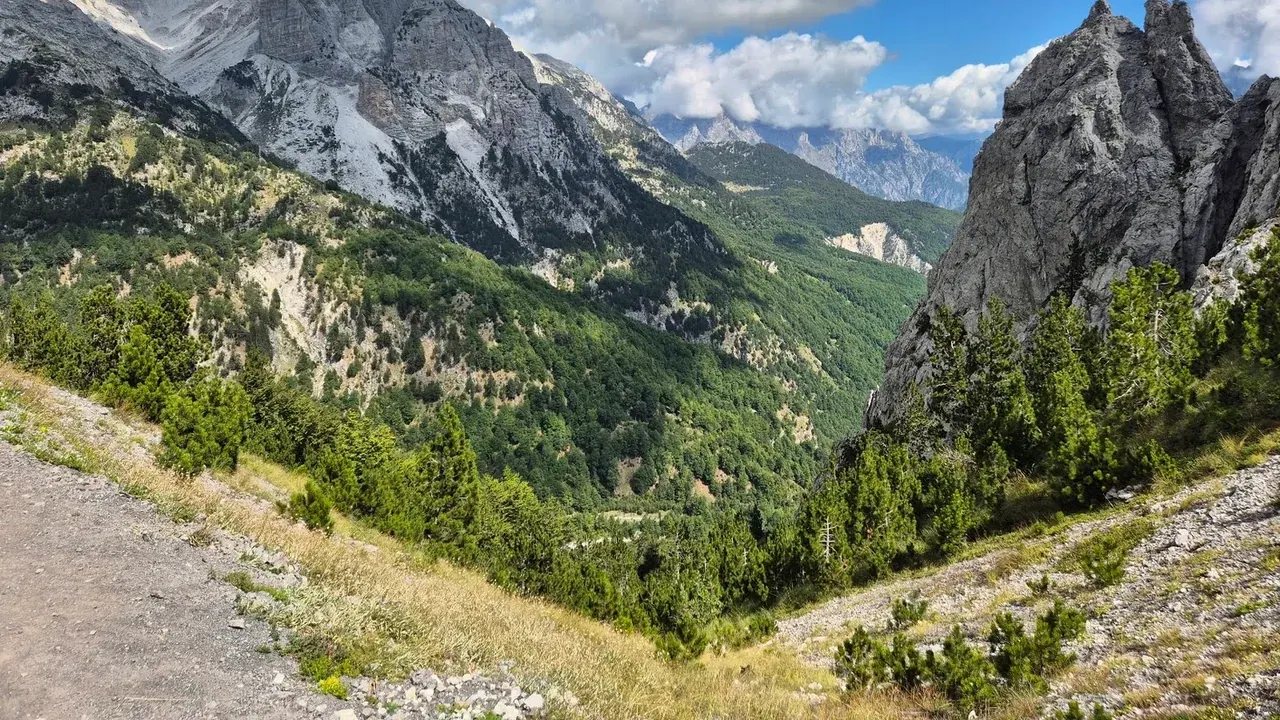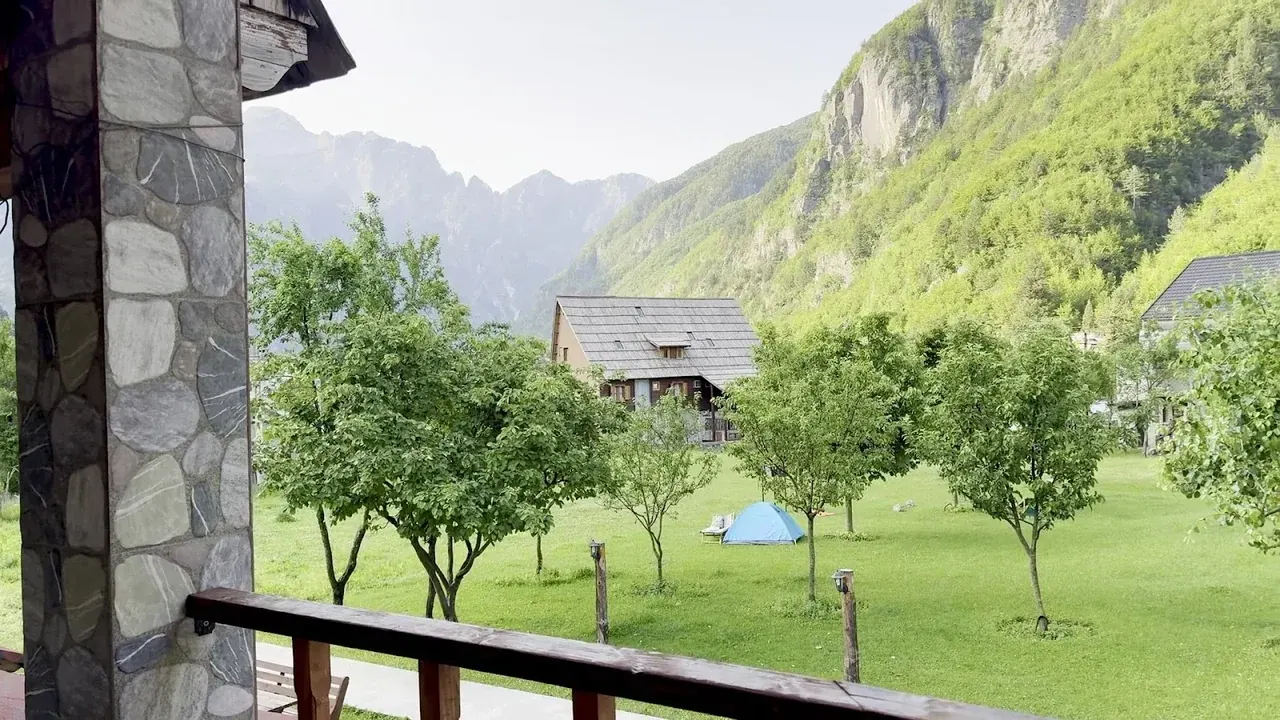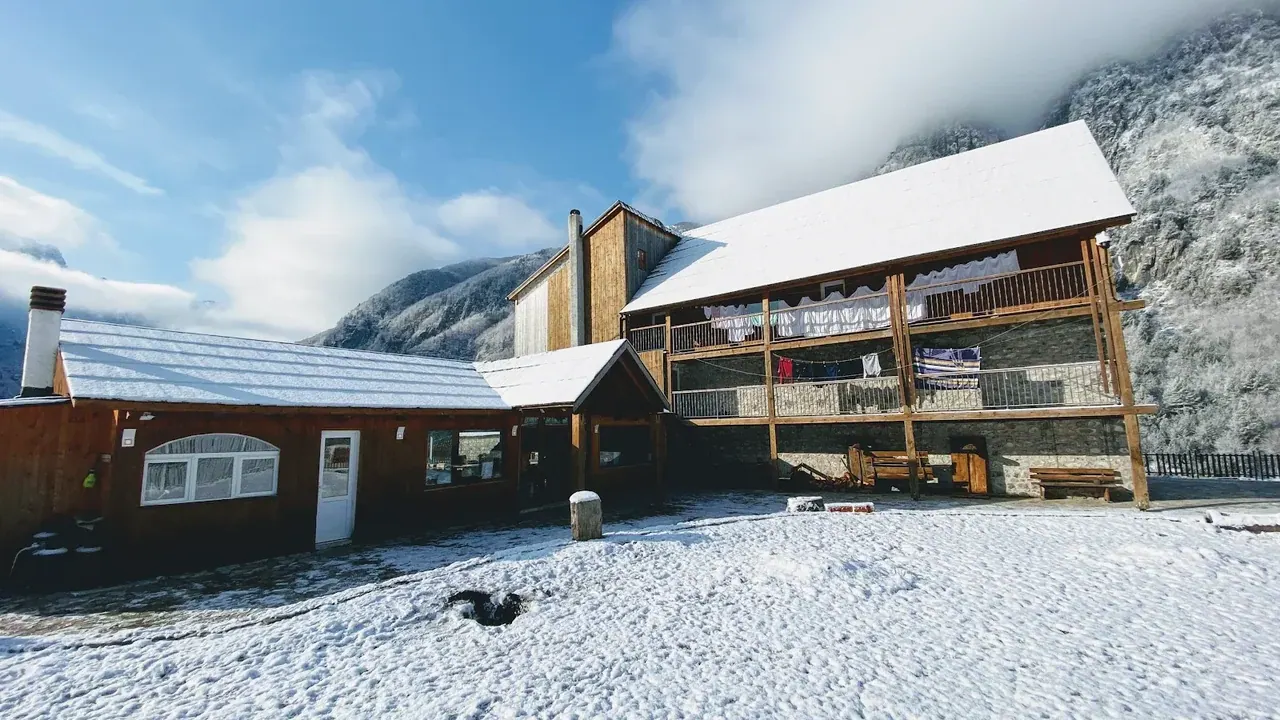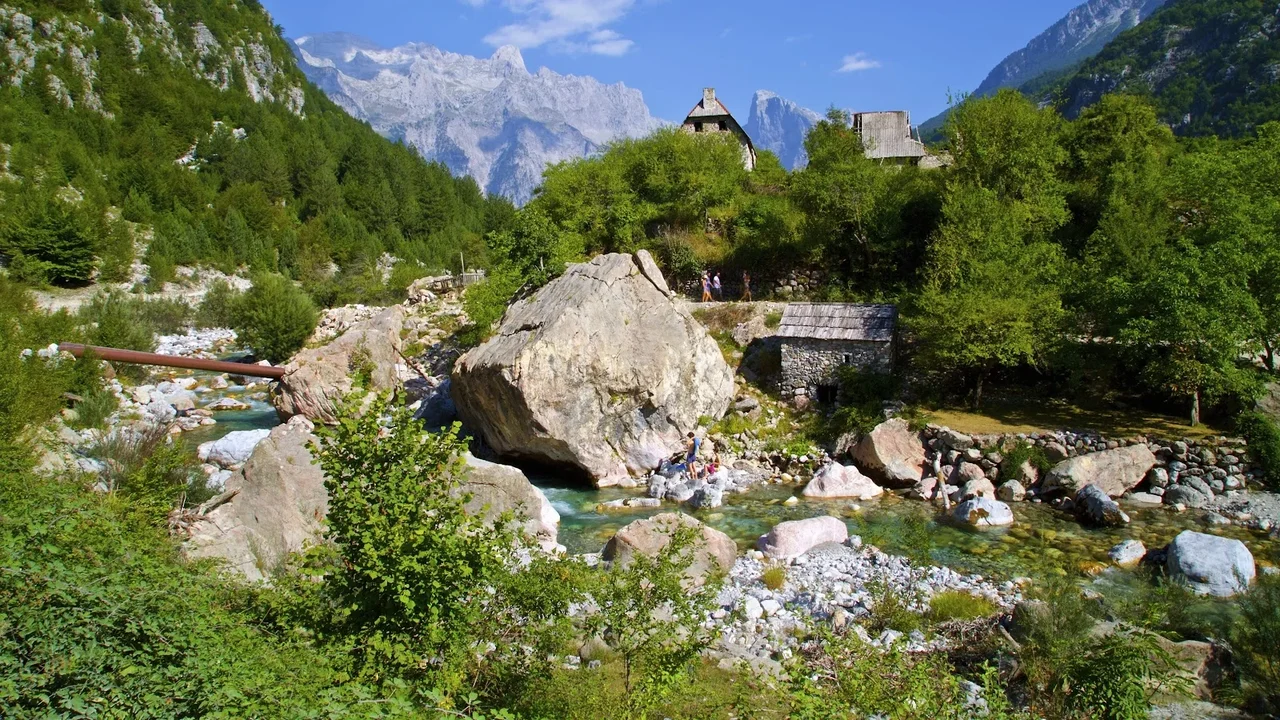
Yes, you can camp in Theth — and it's one of the cheaper, wilder ways to experience the valley. Most campers pitch in a guesthouse garden for a few euros, which buys you a flat spot, a toilet, a shower and usually the option to buy dinner. Wild camping is broadly tolerated in Albania and possible in the national park with common sense and care, but the guesthouse-garden option is easier, more sociable, and kinder to a landscape that sees a lot of feet in summer.
This guide covers both, with the practicalities of water, weather, cost and Leave No Trace in a protected mountain park. If you'd rather sleep indoors, compare options in our where to stay in Theth guide.
Camping in Theth at a glance
| Guesthouse-garden camping | Wild camping | |
|---|---|---|
| Cost | Small pitch fee — confirm locally (often ~500–800 lek / ~€5–8) | Free |
| Facilities | Toilet, shower, water, meals available | None — fully self-sufficient |
| Legality | Straightforward, on private land with permission | Tolerated, not formally regulated; use judgement |
| Best for | Most campers; first-timers; bad weather | Experienced, self-reliant trekkers |
| Water | On tap at the guesthouse | Carry or treat from streams |
| Impact | Low — managed site | Higher — you must Leave No Trace |
The short version: for most people a guesthouse-garden pitch is the sweet spot — cheap, legal, and you can still buy a home-cooked dinner and use a real toilet. Save wild camping for when you're experienced, self-sufficient and genuinely away from the village.
Guesthouse-garden camping
The easiest and most popular way to camp in Theth is to pitch in the garden or field of a guesthouse. Many families welcome tents for a small fee — often somewhere around 500–800 lek (~€5–8) per person, though prices vary, so confirm the current rate directly when you arrive or book. Bring the fee in cash in lek; as everywhere in Theth, there's no ATM and cards aren't accepted (see our budget and cash guide).
For that you typically get a flat, sheltered pitch, access to a toilet and hot shower, drinking water, and the option to eat the guesthouse's dinner and breakfast — which, given how good the home cooking is, most campers happily do. It's also sociable: you're camped alongside other trekkers, and your hosts can advise on weather, trails and the return furgon. In bad weather it's a far better bet than a wild pitch, and some guesthouses will let stranded campers move indoors.
Two places in the valley are set up for this specifically. Camping Freskia at Gjeçaj is a dedicated campground rather than a garden — a wide grassy meadow with room for tents and campervans under the peaks, plus simple home-cooked meals at shared tables. Shpella Guesthouse, a simple stone house near the village centre, keeps space in its garden for tents alongside its rooms, and has its own bar and restaurant on site — useful if you want a pitch but still want to walk to the church and the trailheads. For the indoor alternatives, see where to stay in Theth.
Wild camping: legality and etiquette
Albania has no comprehensive law banning wild camping, and it's widely practised and generally tolerated. You're usually fine on open public land, and even uncultivated private land if it isn't fenced — but Theth sits inside the Alps of Albania National Park, a protected area, so the expectation is that you camp responsibly and lightly.
Sensible etiquette here means:
- Ask if you're near a home or farm. If land is clearly used or fenced, ask the owner — permission is almost always given, and it's the courteous thing to do.
- Camp away from the village centre. Pitch out of sight of the road and houses, not in the middle of someone's meadow.
- Arrive late, leave early. Set up towards dusk and pack down in the morning; don't establish a visible base camp for days.
- Keep groups small and fires off — open fires are a real wildfire risk and inappropriate in the park. Cook on a stove.
- Never camp near border posts. The park reaches toward the Montenegro border; keep well clear of frontier zones.
Where to pitch on the trails
For trekkers on multi-day routes, there are natural pitch spots along the valley's trails — flat ground near streams, meadows below the passes, and the approaches to the classic crossings. Popular staging points include ground along the Theth to Valbona route and the lower meadows before the high passes.
A few pointers:
- Pitch below the passes, not on them. The Peja Pass and Valbona Pass are exposed, windy and waterless — drop back down to sheltered ground with water access to camp.
- Choose flat, durable ground — grass or gravel, not fragile vegetation.
- Check the weather and altitude. Nights are cold at height even in summer; storms roll in fast. A three-season tent and a warm bag are the minimum.
- Water dictates the site. Camp near a stream you can treat, and note that the high, dry sections have none — plan your day so you finish near water.
Water, weather and staying safe
Camping self-sufficiently in the Alps means managing the same three risks that catch out day hikers, only overnight.
Water. Guesthouse pitches have it on tap. Wild campers must carry enough or treat stream water with a filter or tablets — never assume the high trails have springs; the exposed passes are dry, so carry up to 3 litres for the climbs and camp where you can refill.
Weather and cold. The valley floor is cool at night and the higher you camp the colder and windier it gets. Pack a proper sleeping bag, insulated mat and a tent that stands up to wind and rain. Storms build quickly in the afternoons — pitch early and securely.
Isolation. Signal is patchy to non-existent, especially away from the village, so tell someone your plan, carry offline maps, and pack a proper first-aid kit; the nearest hospital is hours away. Our is Theth safe and what to pack guides cover the full picture.
Leave No Trace
Theth is a protected national park and a living valley, not a wilderness to be used up. Camp so that no one can tell you were there:
- Pack out everything — all rubbish, including food scraps and toilet paper. Nothing gets buried or left.
- Toilet well away from water — at least 60 m from streams, and bury waste properly or pack it out.
- No open fires. Use a stove; a careless fire in these mountains is a disaster.
- Leave the site as you found it — move nothing, damage nothing, take only photos.
- Support the locals. Buying a meal or paying a small pitch fee to a guesthouse puts money into the valley that helps keep it protected.
Camping vs the guesthouse: which to choose
If you value comfort, hot food, a shower and certainty in bad weather, the maths for a full half-board guesthouse (~2,000–3,500 lek / ~€20–35 per person) is hard to beat for what you get. Garden camping shaves that to a few euros while keeping the facilities and the dinner. Pure wild camping is free and gives you the mountains to yourself, but demands full self-sufficiency and real experience.
Many trekkers mix all three across a trip — a guesthouse in the village, a garden pitch on a budget night, a wild camp below a pass on a long crossing. Whatever you choose, bring cash in lek and plan around the weather. For the wider logistics, see our practical info hub.
Frequently Asked Questions
Can you wild camp in Theth?
Yes, with care. Albania has no blanket ban on wild camping and it's broadly tolerated, but Theth is inside a national park, so camp away from homes and the village, keep groups small, use a stove rather than a fire, and follow Leave No Trace. Ask permission if you're near private land.
How much does camping in Theth cost?
Wild camping is free. Pitching in a guesthouse garden usually costs a small fee — often around 500–800 lek (~€5–8) per person, though it varies, so confirm locally — and often includes toilet, shower and the option to buy meals. Bring cash in lek; there's no ATM in the valley.
Is guesthouse-garden camping better than wild camping?
For most people, yes. A garden pitch is cheap, legal and low-hassle, with a toilet, shower, water and home-cooked meals on hand, plus shelter if the weather turns. Wild camping is free and wilder but demands full self-sufficiency and experience. Many trekkers combine both across a trip.
Where can I get water when camping in Theth?
Guesthouse pitches have drinking water on tap. Wild campers should carry enough and treat stream water with a filter or purification tablets, camping near a reliable stream. The high passes are dry — carry up to 3 litres for those climbs and plan to finish the day near water.
Do I need special gear to camp in the Albanian Alps?
Yes. Nights are cold at altitude even in summer and storms arrive fast, so bring a wind- and rain-worthy three-season tent, a warm sleeping bag, an insulated mat and a stove. Add offline maps, a first-aid kit and cash in lek, and always tell someone your route.