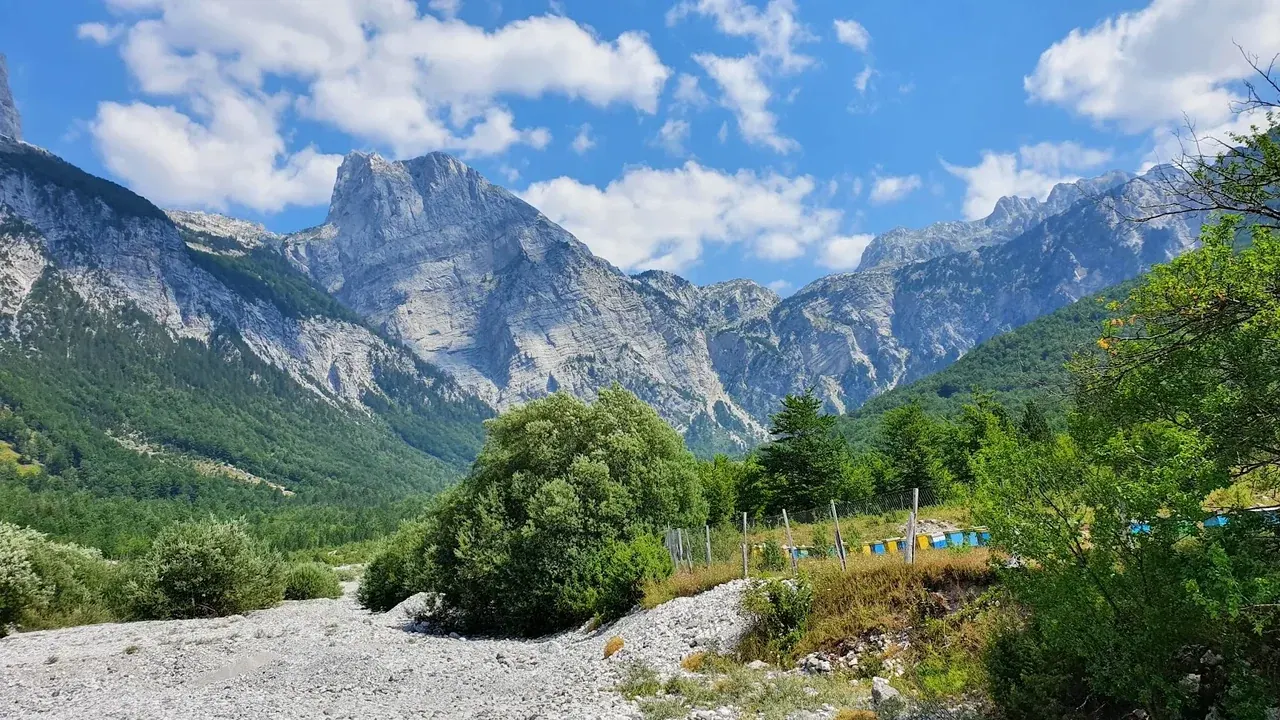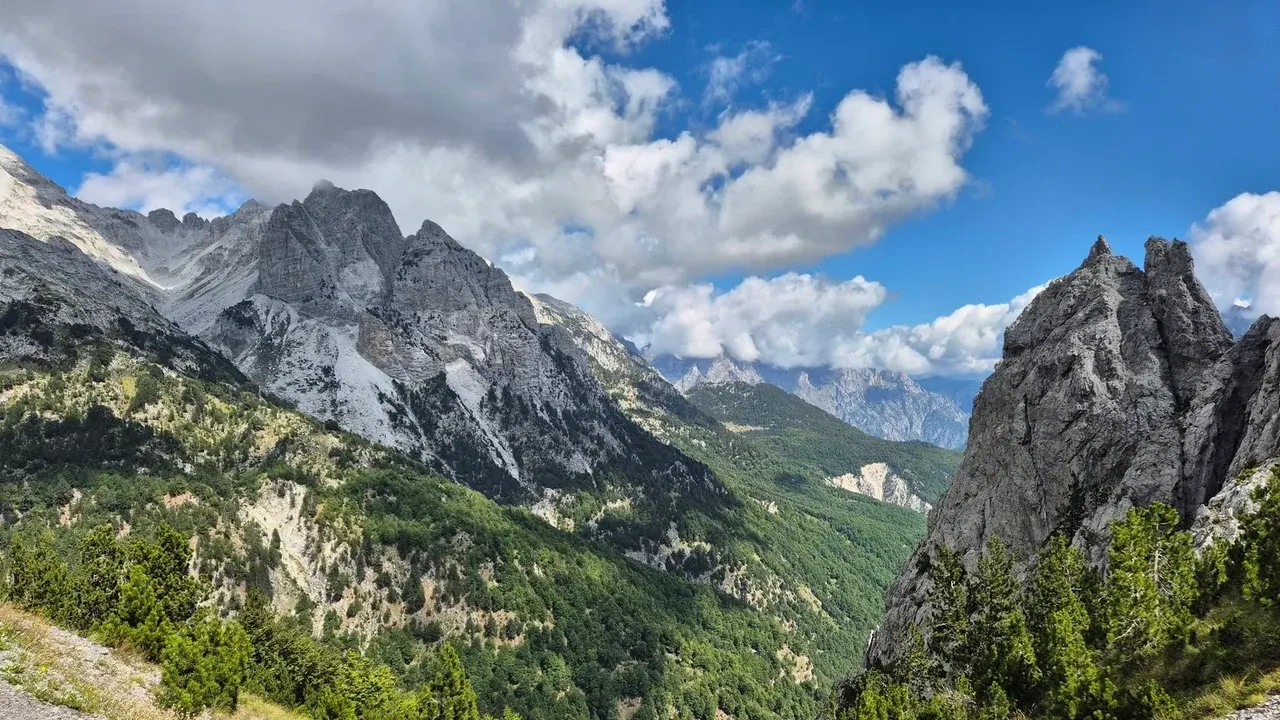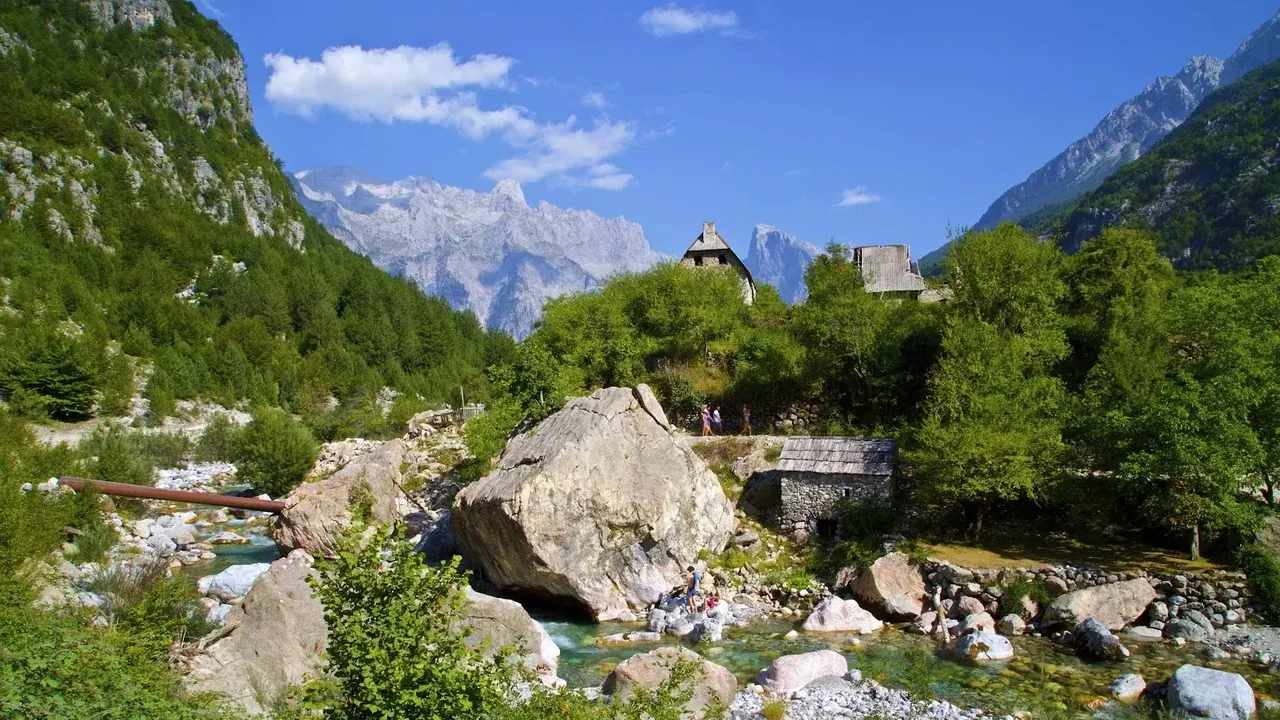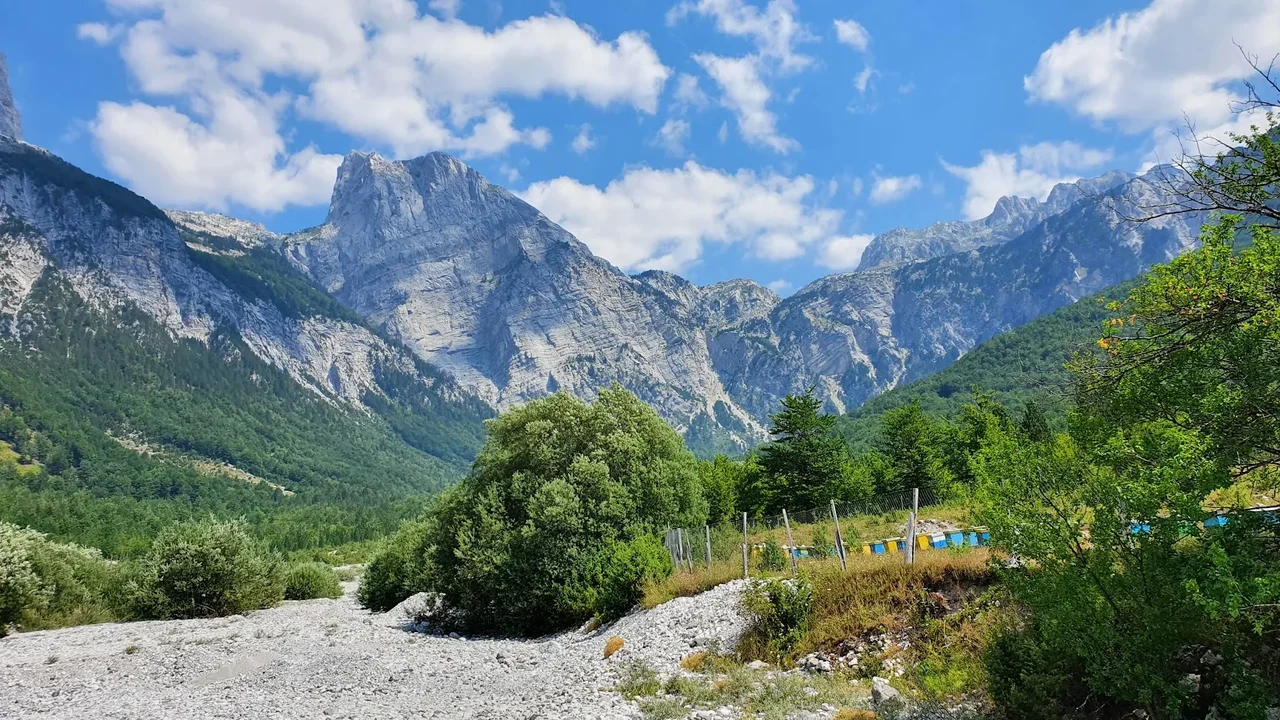
The Peaks of the Balkans is a circular long-distance trek through the Accursed Mountains that loops across three countries — Albania, Montenegro and Kosovo — over roughly ten days. It was originally about 192 km; a redesign of the Valbona–Çerem stage — rerouted via the scenic Qafa e Persllopit pass to avoid an old tractor road — has shortened the common route to around 168 km. It is not technical, but it is a serious mountain undertaking with big daily ascents, high passes and remote guesthouses, and it requires a cross-border permit you must arrange in advance. Theth sits on the route as one of its key overnight hubs. Here is everything you need to plan it for 2026.
For the paperwork specifically, read our dedicated Peaks of the Balkans permits guide before you do anything else.
Peaks of the Balkans at a glance
| Detail | |
|---|---|
| Distance | ~168 km (redesigned route; originally ~192 km) |
| Duration | ~10 days typical; 7–8 for the very fit, 12–13 relaxed |
| Countries | Albania, Montenegro, Kosovo (circular loop) |
| Daily walking | ~15–20 km, 5–8 h, ~1,000 m up and ~1,000 m down |
| Difficulty | Strenuous but non-technical; fitness and stamina required |
| Best season | Roughly mid-June to late September |
| Permit | Cross-border permit required — apply ≥14 days ahead |
| Accommodation | Family guesthouses and simple mountain huts |
| Nights by country | ~4 in Albania, ~3 each in Montenegro and Kosovo |
The short version: this is one of Europe's great emerging treks — wild, affordable and deeply hospitable — but it is remote and rules-bound. Sort your permit early, carry enough cash in lek and euros because card payment barely exists in the mountains, and build in a spare day for weather.
What the trail is
The Peaks of the Balkans links a network of shepherds' paths, old smugglers' routes and border trails that predate the modern frontiers. It was created as a marked long-distance route around 2012 — a cross-border project led by German development cooperation (GIZ) with local action groups in all three countries, conceived barely a decade after the Yugoslav wars as much to knit the border regions back together as to spread tourism (its planners provisionally called it the "Peace Trail"). It has since become the flagship trek of the Western Balkans.
The loop is circular, so you finish where you started and there is no need to double back for a car. Most walkers start and end in either Theth or Valbona in Albania, or in Plav or Vusanje in Montenegro, depending on how their transport and permit dates line up. Villages such as Dobërdol, Çerem, Theth, Valbona, Plav and Vusanje serve as the overnight anchor points between the high passes.
Crucially, it is non-technical: there is no scrambling that requires ropes, and no glacier travel. What makes it hard is the sustained effort — long days, big vertical gain and loss, high altitude passes and long stretches with no shops, no phone signal and no way out but your own legs.
Stage overview
The route is usually broken into around ten stages. Exact splits vary by operator and guidebook, and the redesign between Valbona and Çerem changed one section, so treat the table below as a representative shape rather than a fixed timetable — always cross-check against a current guidebook or GPS track.
| Stage | Rough route | Country | Character |
|---|---|---|---|
| 1 | Theth → Valbona (over Valbona Pass ~1,795 m) | Albania | Classic pass crossing, ~15 km |
| 2 | Valbona → Çerem | Albania | Redesigned high-route section |
| 3 | Çerem → Dobërdol | Albania | Remote high pasture, long climb |
| 4 | Dobërdol → Milishevc | Kosovo | Border crossing, rolling highland |
| 5 | Milishevc → Reka e Allagës | Kosovo | Forest and meadow descents |
| 6 | Reka e Allagës → Doberdol/Babino Polje area | Kosovo/Montenegro | Cross into Montenegro |
| 7 | Babino Polje → Plav | Montenegro | Lakeside town, resupply point |
| 8 | Plav → Vusanje | Montenegro | Valley walk beneath high peaks |
| 9 | Vusanje → Theth (over Peja Pass ~1,742 m) | Montenegro → Albania | Wild pass back into Albania |
| 10 | Buffer / rest / side trips | — | Weather day or summit detour |
Many walkers reverse the direction or start mid-loop to fit permit dates and transport, so the numbering is flexible. The key point is that you will cross each border on foot at a designated pass, which is exactly why the permit matters.
Difficulty and fitness
You do not need alpine skills, but you do need to be genuinely fit. A typical day is 15–20 km with around 1,000 m of ascent and a similar descent, on rough, sometimes loose terrain, at altitude. Do that back to back for a week and a half and it adds up. Some passes involve scree, exposure and careful footing.
Come with broken-in boots, trekking poles, a head for long days, and the honesty to know your pace. If you are unsure whether to hire support, our guided vs self-guided in Theth guide weighs the trade-offs — for a first big multi-day trek, or if you want luggage transfer and permits handled, a guide or agency earns its fee.
When to go
The season runs roughly mid-June to late September. Earlier than that, high passes such as Valbona and Peja can still hold snow; later, weather turns and guesthouses begin to close. July and August are the most reliable for clear passes but also the busiest and hottest. Early September is a sweet spot: settled weather, thinner crowds, cooler walking. Whenever you go, expect afternoon thunderstorms and pack for cold at altitude even in midsummer.
Guesthouses, huts and food
You sleep in family-run guesthouses and simple mountain huts in the villages between passes. Nearly all offer half-board — dinner and breakfast included — and many will also make you a packed lunch for the trail. Standards are basic but the hospitality is famously warm: home-cooked food, shared tables, and a bed after a long day.
You cannot camp your way around casually in some border zones, and guesthouses are the norm anyway, so most walkers pre-book beds — especially in peak season and in the smaller villages with only one or two houses. An agency or guide will arrange the whole chain of nights for you.
Costs in lek and euros
The Peaks of the Balkans is cheap by European trekking standards, but you must carry cash — card payment is essentially non-existent in the mountains, and there are no ATMs in the trail villages including Theth. Withdraw cash before you start.
| Item | Rough cost |
|---|---|
| Half-board guesthouse (Albania) | |
| Half-board (Montenegro/Kosovo) | ~€25–45 pp/night (euros) |
| Packed lunch | |
| Permit via agency | ~€20–35 pp (free in Albania & Kosovo; small Montenegro fee) |
| Full self-guided trip (~10 days) | ~€400–700 pp incl. beds, food, permit |
| Guided/supported package | typically €700–1,300+ pp |
Carry a mix of lek and euros: Albania uses the lek, while Montenegro and Kosovo use the euro. Change enough lek for your Albanian nights before leaving Shkodër or Tirana.
How Theth fits
Theth is one of the trail's key hubs. For many walkers it is the natural start and finish, because it is the easiest trailhead to reach by public transport — a furgon up the paved SH21 from Shkodër. The route's most famous single stage, the Theth–Valbona pass crossing, is walked by huge numbers of people as a standalone day even if they never do the full loop. And the Peja Pass stage drops back into Theth from the Montenegro side, making the village both a gateway out and a gateway home.
That makes Theth an ideal base to acclimatise, sort last-minute logistics, draw cash and rest before or after the big loop. If you only have a few days, you can sample the trail's best sections from here without committing to all ten stages — walk the Theth to Valbona hike one day and the Peja Pass hike from Theth another.
To arrange a local guide, luggage transfer or a supported itinerary from the village, see our activities page.
Frequently Asked Questions
How long is the Peaks of the Balkans trail?
Originally about 192 km, now roughly 168–170 km after a section was redesigned. Most people walk it in around ten days, covering 15–20 km daily. Very fit hikers with light packs manage it in 7–8 days; a relaxed schedule with rest days and side trips takes 12–13.
Do you need a permit for the Peaks of the Balkans?
Yes. Because the trail crosses between Albania, Montenegro and Kosovo on foot, you need a cross-border permit arranged in advance — at least 14 days ahead, though agencies advise 2–6 weeks. It is free in Albania and Kosovo; Montenegro charges a small fee. See our permits guide and verify the current process before you travel.
Is the Peaks of the Balkans difficult?
It is strenuous but not technical. There is no climbing or glacier travel, but you walk long days with about 1,000 m of ascent and descent at altitude, on rough terrain, for a week and a half. You need good fitness, stamina and proper footwear rather than mountaineering skills.
When is the best time to hike the Peaks of the Balkans?
Roughly mid-June to late September, once the high passes are clear of snow. July and August are the most reliable but busiest; early September offers settled weather with fewer crowds. Outside this window, passes can be snowbound and guesthouses closed, so it is not a year-round trek.
Can you start the Peaks of the Balkans in Theth?
Yes — Theth is one of the most popular start and finish points because it is the easiest trailhead to reach by furgon from Shkodër. It sits on the loop between the Valbona Pass and Peja Pass stages, making it a natural hub to begin, end, rest and resupply.