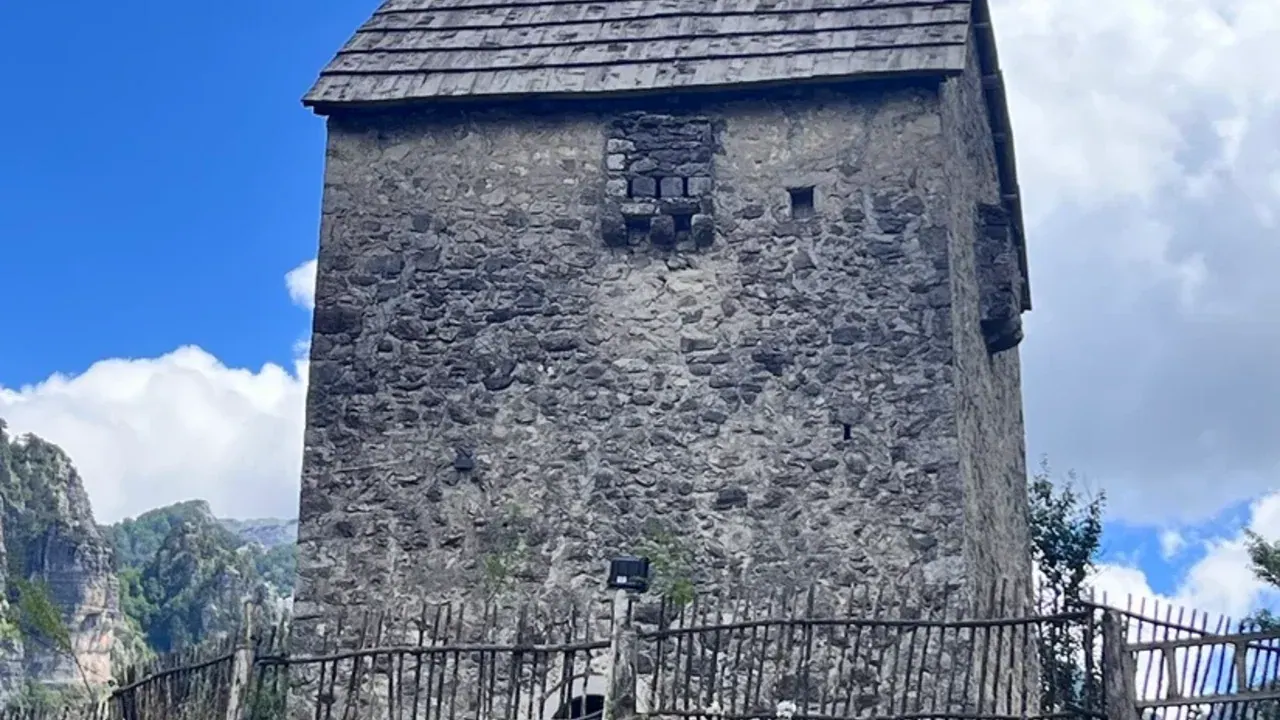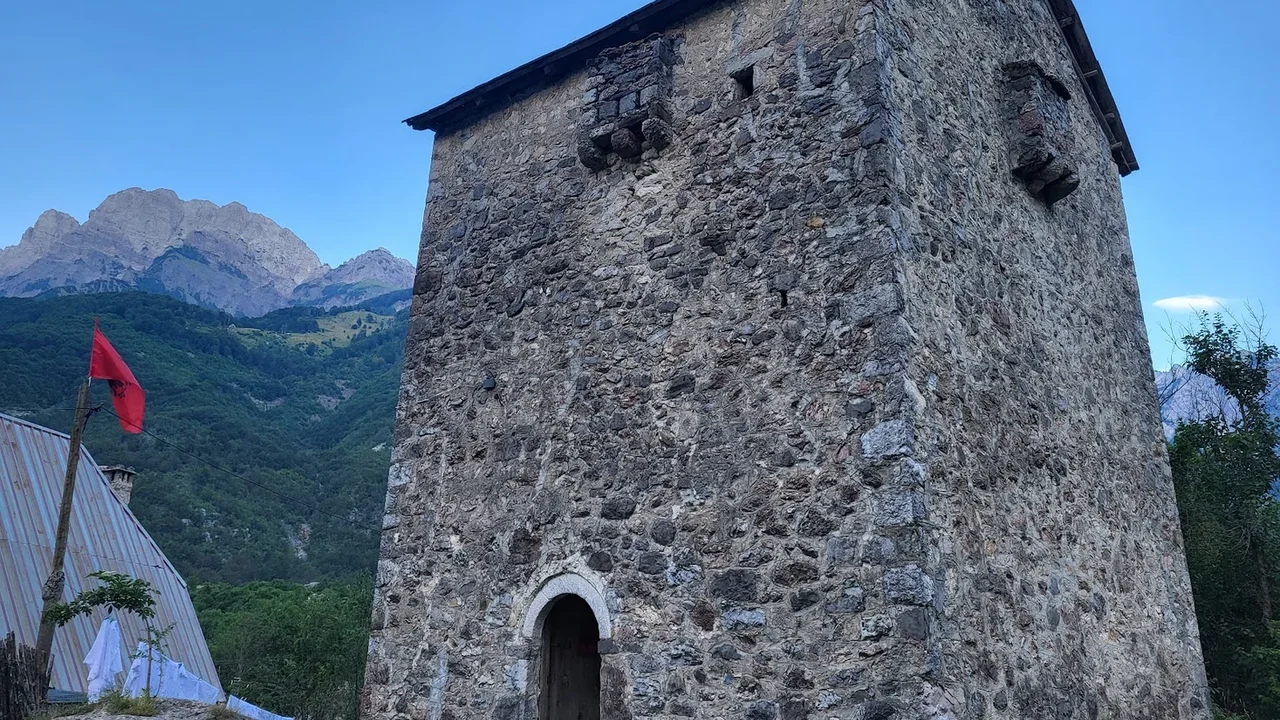
The squat stone tower near the centre of Theth is the kulla e ngujimit — the "lock-in tower" — and it is the single most powerful physical trace of the Kanun of Lekë Dukagjini, the highland customary law that governed these valleys for centuries. Under the Kanun, a man marked in a blood feud (gjakmarrja) could shut himself inside a tower like this one and be spared attack while he stayed within its walls. It is a small building with a very heavy history, and it explains more about old highland life than any museum in the valley.
This is the cultural anchor of the whole Theth experience. To understand why guesthouse hosts still talk about honour and the protection of guests, start here — then read the wider highland customs of the Albanian Alps, the cluster this piece belongs to.
At a glance
| Detail | |
|---|---|
| What it is | Stone lock-in tower (kulla e ngujimit) where feuding men sheltered under Kanun law |
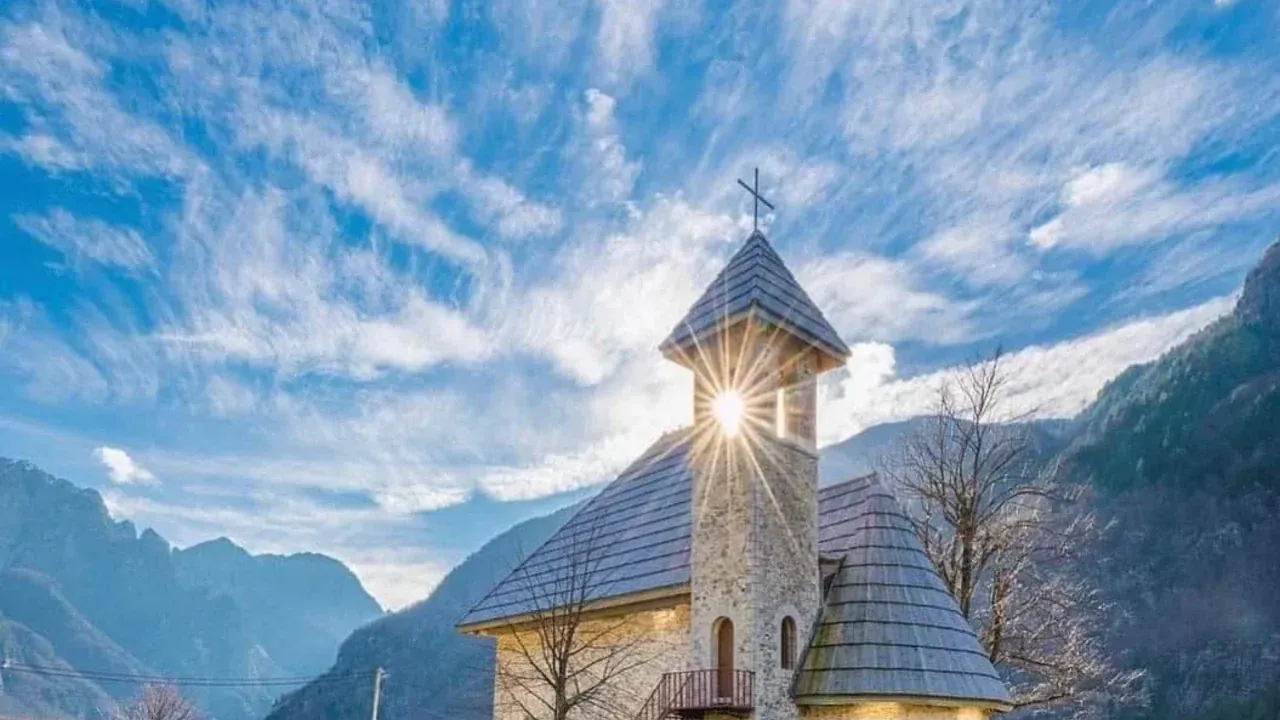
| Where | Central Theth, a short walk from the 1892 church |
| Thought to date from | The 19th century (commonly dated to around 1880) |
| Governing custom | Kanun of Lekë Dukagjini — highland customary law |
| First written down | By Franciscan priest Shtjefën Gjeçovi; published 1933 |
| Entry | ~150 LEK (€1.50) cash to the caretaker when staffed; there are no ATMs in Theth |
| Time needed | 20–40 minutes |
The short version: the tower is a defensive refuge, not a prison in the ordinary sense — men chose to lock themselves in to stay alive during a feud. Visit it alongside the church for the cultural half of any Theth trip, and carry small cash in lek for the entry fee.
What the Kanun actually was
The Kanun was not a book for most of its life. It was a body of oral customary law — rules on family, property, marriage, hospitality, honour and blood — passed down by memory across the Gheg-speaking highlands of northern Albania and into Kosovo and Montenegro. Tradition attributes it to Lekë Dukagjini, a 15th-century nobleman, though the customs it records are older still and predate written Albanian law.
For centuries the highlands were effectively self-governing. Ottoman authority sat lightly on these mountains, and in the absence of a functioning state the Kanun was the law — enforced not by police or judges but by councils of elders, sworn oaths and the collective honour of the clan.
Two ideas run through all of it:
- Besa — the given word, a pledge of honour regarded as sacred and unbreakable. A besa could seal a truce, guarantee safe passage, or place a guest under your protection. Breaking it was the deepest possible disgrace.
- Nderi — personal and family honour, which had to be defended and, once wounded, restored.
The most sobering way honour was restored was gjakmarrja, literally "blood-taking": the blood feud.
Gjakmarrja: the blood feud
Under the Kanun, a killing created a debt of blood that the victim's family was entitled — often obliged — to collect from the killer's family. The feud fell on adult males of the offending household, which is why feuds could smoulder for years and pull in whole clans across generations.
The system was brutal, but it was also rule-bound. The Kanun set out who could be targeted and who could not, when a truce (besa) applied, and how a feud could be closed through the mediation of elders and a formal reconciliation. Women, children and guests were, in principle, outside the line of fire. A temporary besa might be granted so a marked man could work his fields or attend a funeral in safety.
It is easy to read gjakmarrja as lawless violence. It was closer to the opposite — a harsh but codified mechanism for regulating conflict in a society with no state to do it for them.
The lock-in tower: shelter, not cell
This is where the kulla e ngujimit comes in. A man under threat of blood — the head of a household, or the last surviving males of a family — could withdraw into a fortified stone tower. Inside, by the rules of the Kanun, he was not to be harmed. Food was passed in by women of the family, who were not targets. He stayed until the feud was somehow resolved: through the death of those who posed the threat, or — the better outcome — through a reconciliation brokered by elders.
Ngujim means confinement or being walled-in, and that is the paradox of the place. The lock-in was voluntary and self-imposed: a man locked himself in to stay alive. The tower's small windows and thick walls were built for defence, not comfort, and time inside could stretch from weeks into years.
Theth's tower was built as exactly this kind of refuge. Most accounts date it to the 19th century — commonly around 1880 (some attribute it to a local, Nikoll Zef Kaçeku). The "400-year-old" figure you'll occasionally see is a popular exaggeration; the tower belongs to the era of the blood feuds it was built to shelter, not to the Middle Ages.
Gjeçovi and the 1933 Kanun
For all its authority, the Kanun stayed unwritten until the early 20th century, when the Franciscan priest Shtjefën Gjeçovi spent years travelling the highlands, listening to elders recite the customs and setting them down article by article. His compilation, Kanuni i Lekë Dukagjinit, was published posthumously in 1933 and remains the standard reference — 1,262 articles in twelve books, covering everything from church and family to torts, honour and blood.
There is a local thread here worth knowing: Gjeçovi served in this corner of the highlands and is remembered in Theth itself, where, after arriving in 1916, he is credited with opening the valley's first Albanian-language school in 1917 to teach children to read and write in their own tongue. The man who preserved the Kanun in print left his mark on the same village that keeps its most striking monument.
Under communism the Kanun and its feuds were suppressed, and gjakmarrja largely disappeared from daily life. It resurfaced in parts of the north after 1991 — a genuine and painful modern issue in some areas — but this is emphatically not something that touches visitors. Theth is a safe, welcoming place to travel; for reassurance on that point see our guide on whether Theth is safe.
Visiting the tower today
The kulla stands close to the heart of the village, an easy stroll from the church and most central guesthouses — you will pass it without trying. It is a compact, thick-walled stone tower, and part of its power is how modest it looks for the weight of what it represents.
Practical notes:
- Entry is ~150 LEK (€1.50) in lek, paid to the caretaker when the tower is staffed; opening is informal and seasonal, so hours are loose (a neighbour opens it on request). As everywhere in the valley, bring cash — there are no ATMs in Theth, so draw what you need in Shkodër or Tirana first. See our budget and cash guide for how much to carry.
- Time it for softer light. Late afternoon sun rakes across the stone and the peaks behind it, which is kinder for photographs than harsh midday glare.
- Be respectful. This is a monument to real hardship in a living community, not a novelty. Read the on-site information, keep your voice down inside, and ask before photographing local people.
- Pair it with the church and a slow wander of the village centre to make a proper half-day of Theth's cultural side, between hikes.
For the full sweep of the valley's sights, browse our landmarks overview and the lock-in tower landmark page.
Frequently Asked Questions
What is the lock-in tower in Theth?
It is a kulla e ngujimit — a stone tower where men caught in a blood feud (gjakmarrja) sheltered under the Kanun, the highland customary law. Inside its walls they could not be attacked. They stayed until the feud was resolved by reconciliation or ended by the deaths that closed the debt of blood.
How old is the Theth lock-in tower?
Most accounts date it to the 19th century, commonly around 1880 (some name a local builder, Nikoll Zef Kaçeku). The "400 years old" figure sometimes repeated is a popular exaggeration — the tower belongs to the era of the blood feuds it sheltered, not the Middle Ages. Treat the ~1880 date as the best available rather than a documented certainty.
What is the Kanun of Lekë Dukagjini?
The Kanun is northern Albania's traditional customary law, attributed to the 15th-century noble Lekë Dukagjini but far older in origin. It was oral for centuries, governing family, property, honour, hospitality and blood feud, until Franciscan priest Shtjefën Gjeçovi compiled it in writing — published in 1933.
Do blood feuds still happen in Theth?
Blood feuds were suppressed under communism and are not part of everyday life in Theth. The custom re-emerged in parts of northern Albania after 1991, but it does not affect visitors in any way. Theth is a safe, hospitable destination; the tower is history, not a present-day risk.
How much does it cost to visit the tower?
Entry is a small fee paid in lek when the tower is staffed, and opening is informal and seasonal. There are no ATMs in Theth, so bring enough cash from Shkodër or Tirana for the whole trip. Confirm current access with your guesthouse, as hours are not fixed.