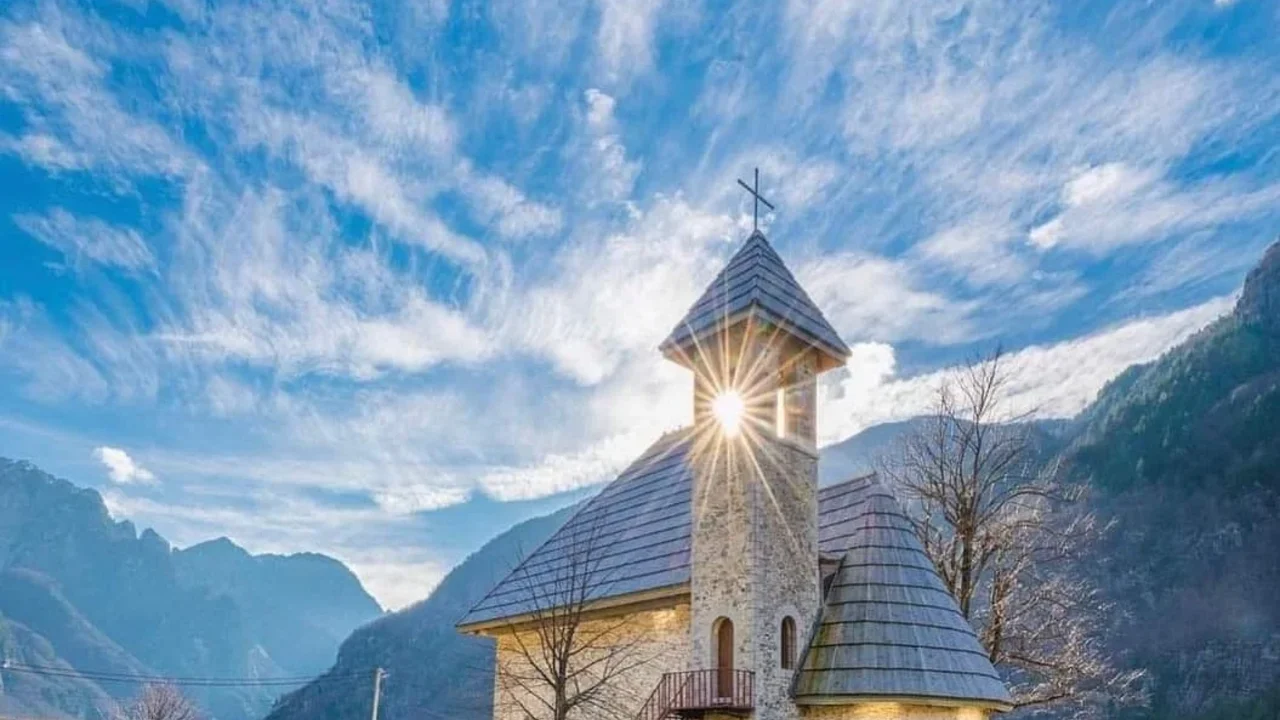
The Church of Theth is the picture you have already seen: a small stone-and-timber Catholic church built in 1892, standing alone in a meadow with the Accursed Mountains rising sheer behind it. It is the visual and physical heart of the village, the point every path in Theth seems to bend towards, and it takes only a few minutes to visit, but it anchors the whole valley. Here is what the church is, what surrounds it, and how to see it well.
For where the church sits in a wider case for the valley, see is Theth worth visiting.
At a glance
| Detail | |
|---|---|
| What | Roman Catholic church, stone and timber |
| Built | 1892 |
| Restored | Rebuilt in the traditional style in the 2000s, largely funded by the Theth diaspora |
| Where | Centre of Theth, in open meadow, the village's orientation point |
| Entry | Free; a working church, so visit respectfully |
| Time needed | 15–30 minutes, longer if you wait for the light |
| Best light | Early morning and late afternoon, with peaks behind |
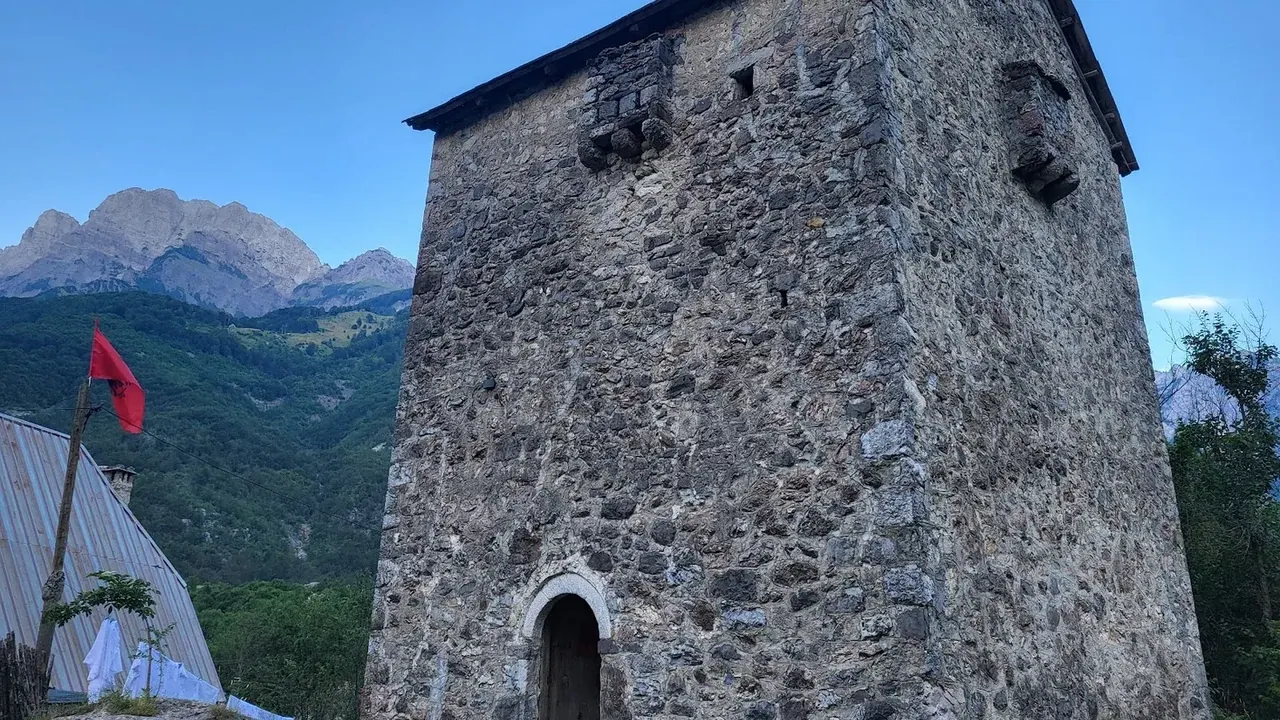
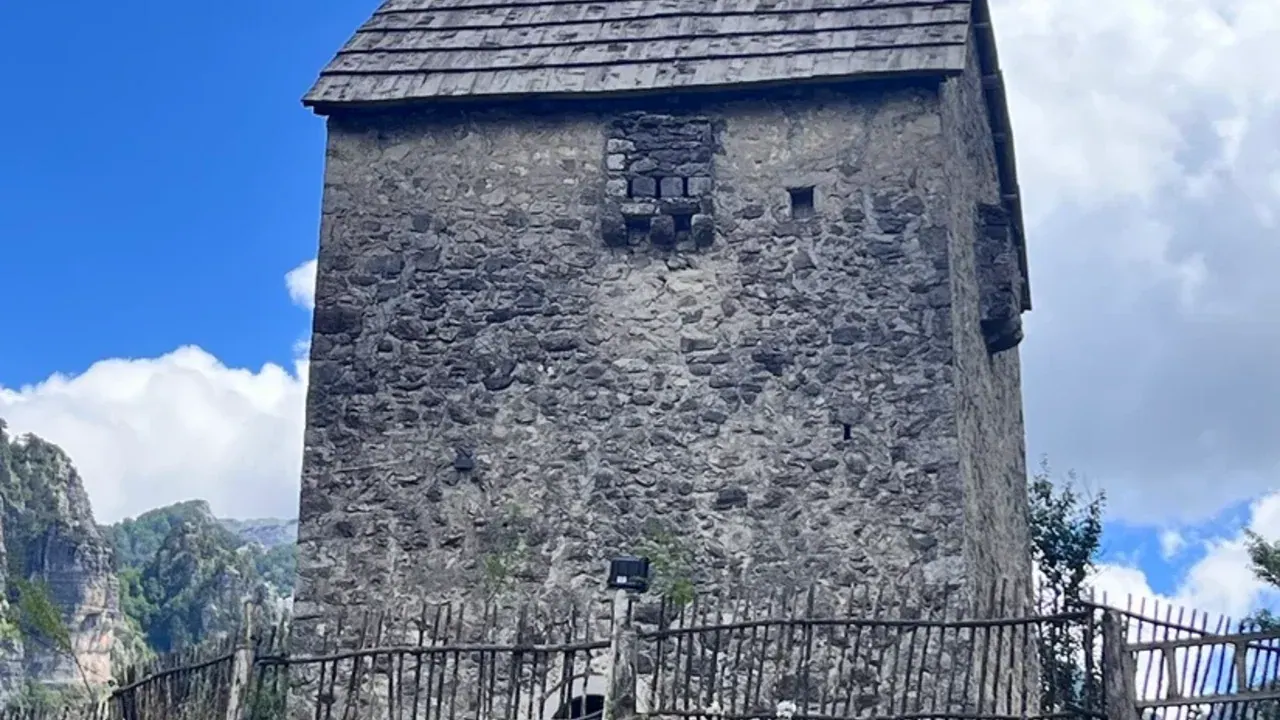
The short version: the church is free and central, it takes a quarter of an hour, and it photographs best in soft morning or evening light. Pair it with the nearby lock-in tower for the cultural half of a Theth day.
The 1892 church
The church was built in 1892 to serve a community that has been Roman Catholic for generations, northern Albania's highlands are a historic Catholic pocket in a mostly Muslim-majority country, and Theth is squarely part of it. It is a modest building of local stone with timber detailing, in scale with the village rather than looming over it, and its plainness is exactly what makes it sit so beautifully in the landscape.
For its first decades the church was more than a place of worship. It was the focus of village life and learning: the Franciscan priest Shtjefën Gjeçovi, the man who compiled the Kanun of Lekë Dukagjini into writing, is remembered here for opening the valley's first Albanian-language school in 1917. He had arrived in 1916, the summer a cholera outbreak struck the valley, and stayed to teach local children to read and write in their own tongue. The church and the valley's cultural memory are tightly bound together.
Closure and restoration
Like every church in Albania, Theth's did not survive the communist era untouched. Under Enver Hoxha's militantly atheist state, which banned religion outright in 1967, the building was closed and repurposed, accounts describe it serving as a health or maternity post rather than a place of worship.
After the regime fell in the early 1990s the church came back to life. It was restored in the traditional style through the 2000s, an effort funded in large part by the Theth diaspora, families with roots in the valley, many now in the United States, who paid to rebuild the church of their grandparents. What you see today is that faithful reconstruction: the same spot, the same simple form, brought back into full use for the community.
The village centre around it
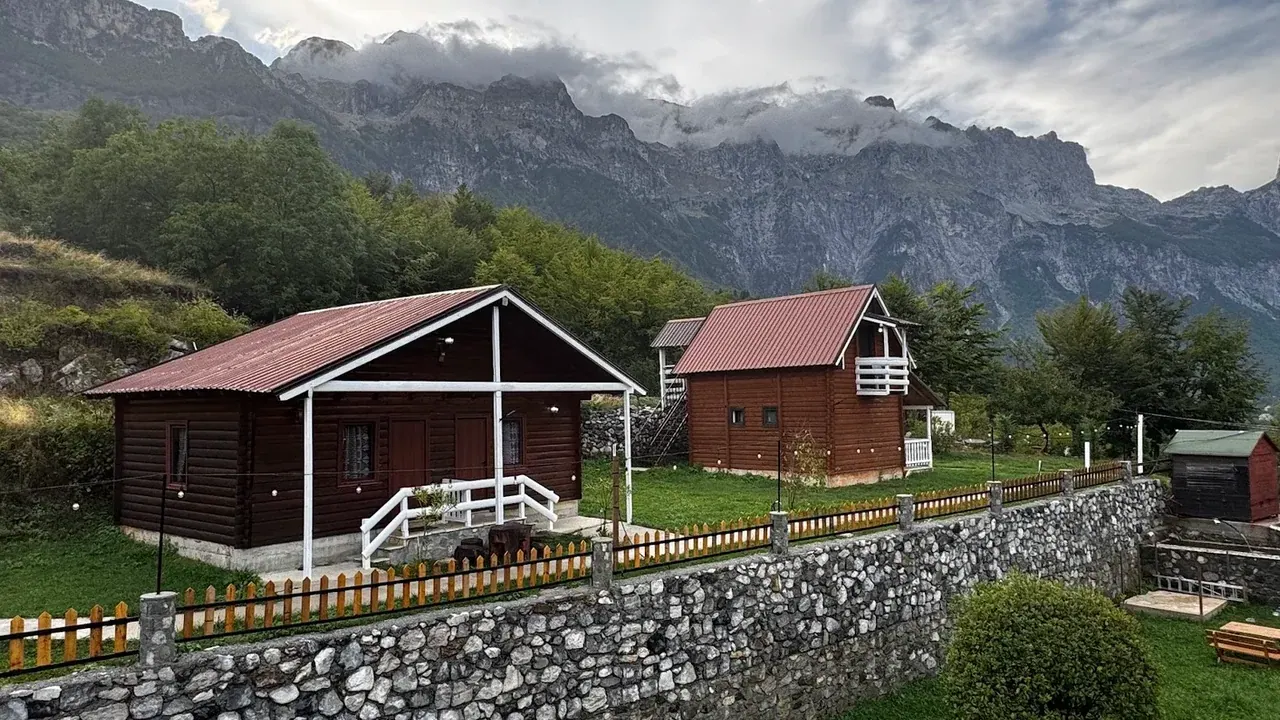
The church is also how you orient yourself in Theth. The village is not a tight cluster but a scatter of stone guesthouses and farmhouses spread along the valley floor, and the church in its meadow is the natural centre of gravity. The landmark locals and hikers use to give directions.
Within a short walk of it you will find:
- The lock-in tower (kulla e ngujimit), the stone refuge tied to the Kanun and blood-feud custom, the cultural companion piece to the church.
- Several central guesthouses and the valley's small cluster of services.
- Trailheads and paths fanning out towards Grunas Waterfall, the Blue Eye and the easier valley-floor loops.
- Open meadow with clean sightlines to the surrounding peaks. The reason the church photographs the way it does.
If you only have gentle legs or a spare hour, the church makes the perfect hub for one of our easy walks around Theth.
Because Theth spreads out so much, the church is worth thinking of as the village's living room rather than just a monument. It is where paths converge, where you get your bearings after arriving off the mountain road, and where the scale of the valley first hits you, the building small and human against peaks that top 2,000 m. Many visitors return to it more than once during a stay, catching it in different light, and it appears in almost every photograph anyone takes of Theth. Give it a proper look rather than a passing glance.
Fitting the church into your day
The church works best as the cultural counterpoint to Theth's hiking. A typical rhythm is a big walk in the morning, Grunas Waterfall, the Blue Eye or the long Theth to Valbona crossing, followed by an easy afternoon around the centre taking in the church, the lock-in tower and a slow coffee.
If you are short on time or resting tired legs, you can see the church, the tower and the immediate village centre in a gentle hour or two on foot, no transport needed. Combine it with a wander down toward the lower valley and the hamlet of Nderlysa if you have longer, or keep it as the quiet bookend to a hard day's hiking. Either way, it belongs on every Theth itinerary, for how much time to give the valley overall, see how many days in Theth.
Best light and photography
The church earns its fame from contrast, pale stone and dark timber against enormous grey-green mountains, and light is what makes or breaks the shot.
- Early morning brings soft, even light and the best chance of mist lifting off the meadows behind the church.
- Late afternoon and golden hour warm the stone and throw long shadows, with the peaks catching the last sun. This is the classic frame.
- Harsh midday flattens everything and blows out the sky, the weakest time to shoot it.
- Autumn adds turning colour in the valley; early summer brings wildflowers to the meadow.
Stand back and let the mountains do the work: the church is small in the frame on purpose. For a full run of the valley's best vantage points, see our photography guide.
Visiting respectfully
This is a working church in a living, faith-rooted community, not a museum piece.
- Dress and behave as you would in any church: cover shoulders, keep your voice low, and if a service is on, wait or leave quietly.
- Ask before photographing people, especially locals at worship.
- Entry is free. There is nothing to pay, but as everywhere in Theth, carry cash in lek for the rest of your day. There are no ATMs in the valley, so draw what you need in Shkodër or Tirana first.
- Combine it with the lock-in tower and a slow wander of the centre to make a proper cultural half-day between hikes.
For the full list of what to see in and around the valley, browse our landmarks overview and the dedicated Theth church landmark page.
Frequently Asked Questions
When was the Theth church built?
The Catholic church of Theth was built in 1892. It is a modest stone-and-timber building that has stood on the same spot ever since. Closed and repurposed during Albania's communist era, it was restored in the traditional style through the 2000s, largely funded by the Theth diaspora abroad.
Can you go inside Theth church?
Yes. It is a working Roman Catholic church, open to respectful visitors, and entry is free. Dress modestly, keep quiet inside, and if a service is under way, wait or come back later. There is no ticket, but carry cash in lek for the rest of your day, as Theth has no ATMs.
Where is the church in Theth?
It sits in open meadow at the centre of Theth, and it is the village's main orientation point, locals give directions by it. Guesthouses, the lock-in tower and the main trailheads for Grunas Waterfall and the Blue Eye are all within a short walk of the church.
What is the best time to photograph Theth church?
Early morning and late afternoon. Soft morning light often comes with mist rising off the meadows, while golden hour warms the stone and lights the peaks behind, the classic shot. Avoid harsh midday, which flattens the scene and blows out the sky. Autumn colour and early-summer wildflowers add extra interest.
What else is near the church?
The lock-in tower (kulla e ngujimit) is a short walk away and pairs naturally with the church for a cultural half-day. Central guesthouses, the valley's small services and the trailheads towards Grunas Waterfall and the Blue Eye all cluster around this part of Theth, making the church a convenient base for exploring on foot.